

When you’re called to serve in the uniformed services, federal law ensures you don’t have to sacrifice your civilian employment benefits. The Uniformed Services Employment and Reemployment Rights Act (USERRA) requires employers to continue or preserve most workplace benefits during military leave, including health insurance continuation for up to 24 months, full pension vesting credit, and protection of seniority-based benefits. Understanding these protections helps you make informed decisions before deployment and ensures you can hold your employer accountable when you return.
Key Takeaways
- USERRA provides up to 24 months of health insurance continuation during military service—longer than COBRA’s 18 months.
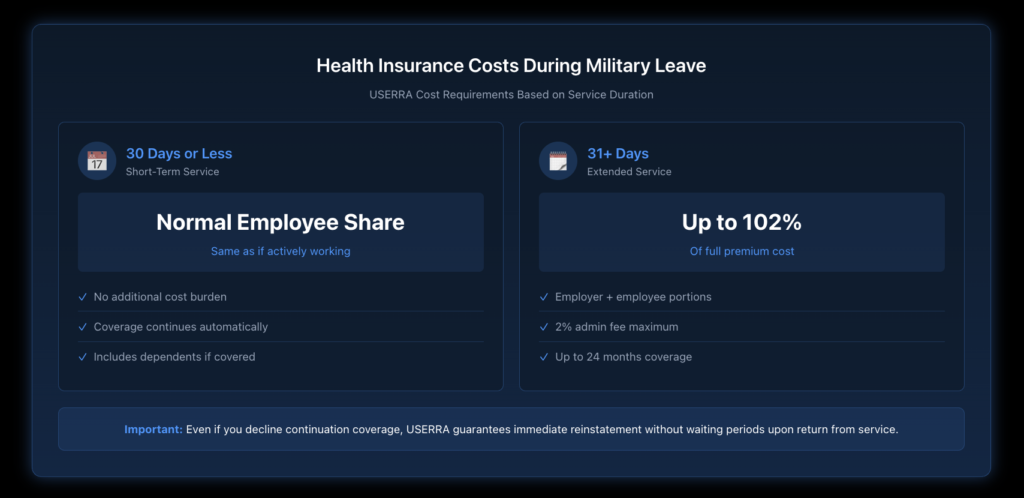
- For military service of 30 days or less, health coverage continues at your normal employee cost share.
- For longer service, you may pay up to 102% of the full premium (employer + employee portions plus 2% administration).
- Pension and retirement benefits continue accruing as if you remained continuously employed.
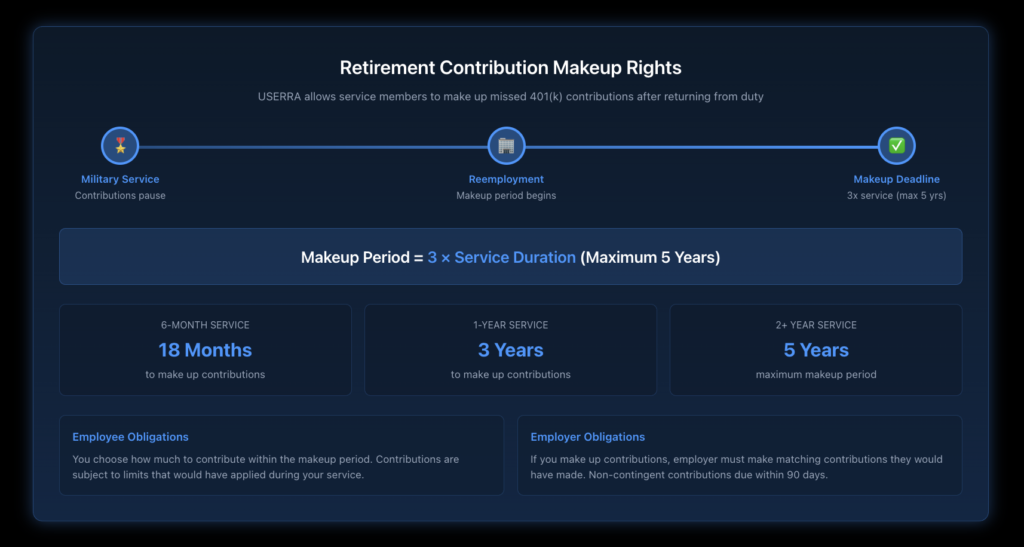
- You have up to three times your service period (maximum five years) to make up missed retirement contributions.
- Employers cannot force you to use vacation time during military leave.
- Upon reemployment, all benefits must be reinstated immediately without waiting periods.
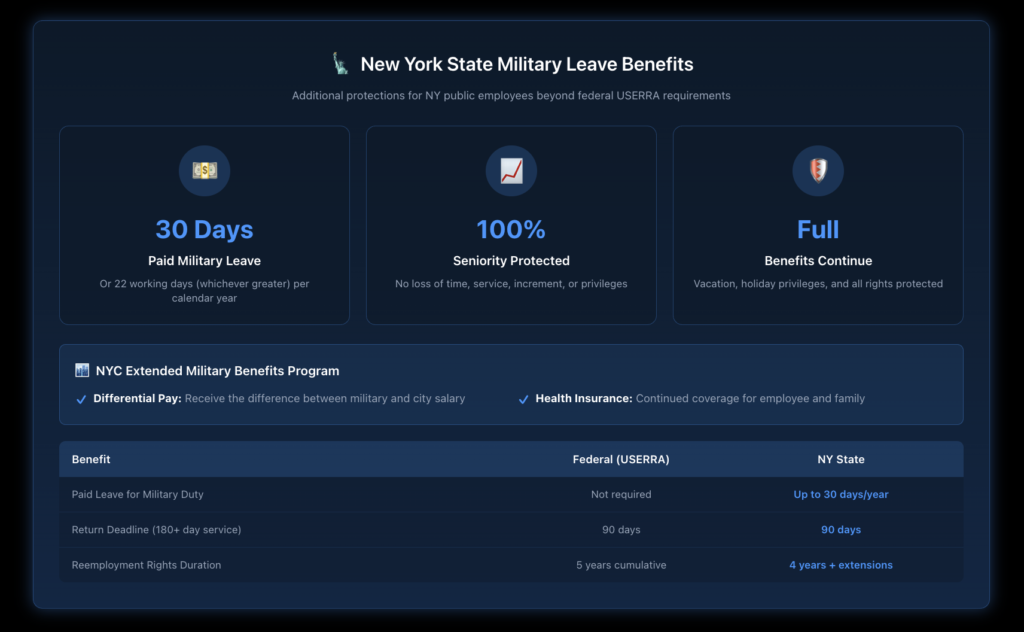
- New York public employees receive additional protections, including up to 30 days of paid military leave annually.
Disclaimer: This article provides general information for informational purposes only and should not be considered a substitute for legal advice. It is essential to consult with an experienced employment lawyer at our law firm to discuss the specific facts of your case and understand your legal rights and options. This information does not create an attorney-client relationship.
How Does Health Insurance Continuation Work Under USERRA?
USERRA provides health insurance protections that exceed what’s available under COBRA for most employees. If you have employer-sponsored health coverage when you leave for military service, you and your dependents can elect to continue that coverage.
What’s the Maximum Duration for Continued Health Coverage?
You can continue health plan coverage for up to 24 months from the date your military service begins. This is six months longer than the standard COBRA continuation period of 18 months. The coverage period runs concurrently—meaning if you use USERRA continuation rights, they count against any COBRA eligibility you might have.
How Much Will Health Insurance Cost During Military Leave?
The cost depends on how long you’ll be gone. For military leave of 30 days or less, your employer must continue coverage at the same cost you paid before leaving—typically just your regular employee premium contribution. For service lasting 31 days or longer, you can be required to pay up to 102% of the full premium cost. Unlike other forms of protected leave, USERRA provides a COBRA-like structure for continuation coverage but extends protection to 24 months rather than 18. This includes both the employer and employee portions, plus 2% for administrative costs.
What Happens If You Don’t Elect Continuation Coverage?
Even if you decline continuation coverage during your service, USERRA protects your right to be immediately reinstated in your employer’s health plan upon reemployment. Your employer cannot impose any waiting period or pre-existing condition exclusion—you’re treated as if you never left. The only exception involves service-connected disabilities or illnesses determined by the VA to have been incurred during military service, which would be covered by military or VA healthcare instead.
What Happens to Retirement Benefits During Military Service?
Retirement benefits receive strong protection under USERRA. The Department of Labor’s pension guidance makes clear that employers must treat your military service period as continuous employment for pension purposes.
Do Pension Benefits Continue Accruing?
Yes. For vesting, participation eligibility, and benefit accrual calculations, your entire period of military absence must be counted as if you remained continuously employed. If you participate in a defined benefit pension plan, your service time counts toward your pension calculation. If your employer offers profit-sharing contributions that aren’t contingent on employee contributions, those must be made as if you’d been working.
What About 401(k) and Other Retirement Accounts?
While you’re on military leave, your employer isn’t required to make contributions to your 401(k) or similar plan since you’re not receiving compensation from which to defer. However, when you return, USERRA provides powerful makeup rights.
You have up to three times your period of military service—not to exceed five years—to make up missed contributions. If you contribute, your employer must make any matching contributions they would have made. These makeup rights give returning service members significant flexibility to restore their retirement savings. The IRS provides specific guidance on how these makeup contributions should be reported and allocated across multiple tax years.
How Is Compensation Calculated for Pension Purposes?
When calculating pension accruals for your absence, employers must use the compensation you would have received had you remained employed. If that rate is reasonably certain based on your work history, the employer uses that figure. The DOL fact sheet provides detailed examples of how to handle overtime calculations and variable compensation. If your compensation varied—due to commissions, overtime, or irregular hours—the employer must use your average compensation from the 12 months before your leave.
What Seniority Rights Are Protected During Military Leave?
USERRA’s “escalator principle” ensures you step back onto the career ladder at the point you would have reached had you never left for service. This broad, generous protection applies to pay increases, promotions, and all seniority-based benefits.
Do You Continue Earning Seniority?
Absolutely. Your seniority continues to accrue throughout your military service. When you return, you’re entitled to the same seniority status—and all rights and benefits determined by seniority—that you would have had with reasonable certainty if not for your absence.
What About Pay Raises and Promotions?
If your employer provided cost-of-living increases, step increases, or promotions that you would have received based on continued service, you’re entitled to those adjustments upon return. For example, if your position normally receives annual raises and you served for two years, your returning salary should reflect two years of increases.
Can Your Employer Require You to Use Vacation Time?
No. Under USERRA, employers cannot force you to use accrued vacation, annual leave, or similar paid time off during your military service. You may choose to use vacation time to continue receiving your civilian pay while serving, but that choice belongs entirely to you.
However, vacation accrual presents a nuanced issue. Vacation time generally accrues based on seniority or continued service, so whether it continues accruing during military leave depends on how your employer treats other employees on comparable leaves of absence. If employees on other extended unpaid leaves continue accruing vacation, you must receive the same treatment.
What Non-Seniority Benefits Must Continue?
During military service, USERRA considers you to be on a “furlough or leave of absence” from your employer. This means you’re entitled to whatever non-seniority rights and benefits your employer provides to other employees on comparable leaves.
Which Benefits Apply?
The answer depends on your employer’s policies for other leaves of absence. Common examples include holiday pay, life insurance continuation, and access to employee assistance programs. Your employer must compare your military leave to their most generous form of comparable leave and provide you with that level of benefits.
What About Life Insurance and Disability Coverage?
Life insurance and long-term disability coverage often terminate when employment ends or when an employee goes on unpaid leave. Check your employer’s specific policies. Some employers voluntarily continue these benefits; others may offer conversion options that allow you to maintain individual coverage during your service period.
What Additional Protections Exist in New York?
New York State Military Law provides additional protections beyond federal USERRA requirements, particularly for public employees.
What Do New York Public Employees Receive?
New York public officers and employees are entitled to paid military leave for up to 30 days (or 22 working days, whichever is greater) per calendar year while performing ordered military duty. They cannot suffer “any loss or diminution of time service, increment, vacation or holiday privileges, or any other right or privilege” due to military service.
How Do New York City Employees Benefit?
New York City employees called for covered military operations may be eligible for the Extended Military Benefits Program, which provides differential pay (the difference between military and civilian salary) and continued health insurance benefits for the employee and their family.
What Should You Do Before Deploying?
Proper preparation protects your benefits and makes the return to work smoother.
Provide Written Notice
While USERRA doesn’t require written notice, providing it creates a clear record. Inform your employer of your anticipated absence as early as possible, unless military necessity prevents advance notice. Keep copies of all correspondence and your military orders.
Document Your Benefits
Before leaving, obtain written documentation of all your current benefits, including health insurance plan details and costs, retirement account balances and contribution rates, accrued vacation and sick leave, current salary and any pending increases, and life insurance and disability coverage terms.
Elect Health Coverage Continuation
If you want to continue health coverage during service exceeding 30 days, make your election promptly according to your plan’s procedures. Understand the costs and arrange payment. Some plans may allow payroll deduction from any differential pay you receive.
What Are Your Rights Upon Returning from Service?
USERRA provides robust reemployment rights that complement benefits continuation.
How Quickly Must Benefits Be Reinstated?
All benefits must be reinstated immediately upon reemployment. For health insurance, you must be allowed to reenroll without any waiting period, proof of insurability, or pre-existing condition exclusion. Your employer must begin making pension contributions promptly—within 90 days for non-contingent employer contributions or according to the plan’s normal schedule for contributions matching your makeup deferrals.
What If Your Employer Violated Your Rights?
If your employer failed to continue benefits properly, discriminated against you based on military service, or refused proper reemployment, you have legal recourse. You can file a complaint with the Veterans’ Employment and Training Service (VETS) or bring a private action in court. Remedies may include reinstatement of lost benefits, back pay, liquidated damages for willful violations, and attorneys’ fees.
How Does USERRA Interact with Other Leave Laws?
USERRA works alongside other employment protections. The Family and Medical Leave Act provides separate protections for military family members, including qualifying exigency leave and military caregiver leave. If you’re a National Guard or Reserve member with a service-connected disability, both USERRA and the Americans with Disabilities Act may provide overlapping protections for accommodation requests.
Ready to Protect Your Rights?
If you’re preparing for military service and have questions about your benefits, or if you’ve returned from service to find your employer hasn’t honored their obligations, Nisar Law Group can help. Our employment law attorneys have extensive experience protecting the rights of service members across New York and New Jersey. Contact us today for a consultation to discuss your situation.
Frequently Asked Questions About Benefits Continuation During Military Service
Under USERRA, civilian employees who serve in the military are entitled to continue employer-sponsored health insurance for up to 24 months, receive full credit for pension vesting and benefit accrual during their absence, maintain all seniority-based benefits as if continuously employed, and have the option to make up missed retirement contributions upon return. Additionally, employers cannot force employees to use vacation time during military leave, and all benefits must be reinstated immediately upon reemployment without waiting periods.
USERRA protections begin immediately with your first day of military service—there’s no minimum service requirement for civilian employment benefits protection. However, to maintain reemployment rights, your cumulative military service while employed with that employer generally cannot exceed five years, with exceptions for certain types of service. Benefits like 24-month health insurance continuation run from the start of each service period.
Military retirement benefits require completing a minimum service commitment, typically 20 years for immediate retirement pay. However, USERRA civilian employment protections are separate from military retirement. USERRA ensures your civilian employer continues crediting your pension during military service as if you remained employed, so your civilian retirement benefits grow regardless of whether you qualify for military retirement.
USERRA benefits and protections start immediately when you leave civilian employment for military service. Your health insurance continuation rights are available from day one. For service of 30 days or less, health coverage continues at your normal employee cost. Pension credits and seniority continue accruing from the moment you leave. Upon return, benefits must be reinstated immediately without any waiting period.
No. While employers may administratively process your status as “on leave” rather than active, they cannot use this characterization to deny USERRA-protected benefits. If you elect health insurance continuation and make the required payments, coverage must continue. Pension accrual must continue regardless of how the employer labels your status. Any termination of benefits based on military service may constitute illegal discrimination under USERRA.
USERRA doesn’t specifically address flexible spending accounts, but DOL guidance suggests health FSAs should follow the same continuation rules as other health benefits. Employees may continue coverage during leave by making required contributions or may be reinstated upon return. The uniform coverage rule still applies—if you continue FSA coverage, the full annual election minus prior reimbursements remains available.
Yes, your dependents covered under your employer’s health plan have the same continuation rights you do under USERRA. If you elect to continue coverage, your spouse and dependents can remain covered for up to 24 months. However, dependents don’t have independent election rights under USERRA—they can only continue coverage while you continue your election. They may have separate rights under COBRA if they lose coverage.
Maintain copies of your military orders, all correspondence with your employer about your leave, benefit election forms, premium payment records, and documentation of your pre-service benefits package, including health insurance summary, retirement account statements, salary records, and accrued leave balances. This documentation is essential if disputes arise about proper benefits continuation or reinstatement.

