

Facing a Section 75 disciplinary hearing can be overwhelming for New York civil service employees. The preparation phase is critical – it determines whether you’ll effectively defend your job, reputation, and career against serious charges. You typically have 8 days to prepare after receiving charges, though you can request additional time if the complexity warrants it. Success requires gathering evidence, securing witnesses, understanding procedural rights, and developing a strategic defense that addresses each charge specifically.
Key Takeaways
- You have a minimum of 8 days to prepare, but you can request reasonable extensions for complex cases.
- Section 75 protects permanent civil service employees who have completed probation.
- Document everything related to the charges and gather supporting evidence immediately.
- You’re entitled to representation by an attorney or union representative.
- Pre-hearing preparation includes reviewing personnel files, identifying witnesses, and understanding the specific charges.
- The burden of proof is on the employer to establish guilt by a preponderance of evidence.
Disclaimer: This article provides general information for informational purposes only and should not be considered a substitute for legal advice. It is essential to consult with an experienced employment lawyer at our law firm to discuss the specific facts of your case and understand your legal rights and options. This information does not create an attorney-client relationship.
What is Section 75 NYS Civil Service Law?
Section 75 of the New York Civil Service Law provides crucial due process protections for permanent civil service employees facing disciplinary action. This statute ensures you can’t be suspended, demoted, or terminated without proper cause and a fair hearing. The law applies to state and local government employees who have achieved permanent status after completing their probationary period.
These protections represent fundamental employment rights in New York’s public sector. The statute requires employers to prove charges of incompetence or misconduct through substantial evidence, not mere allegations or suspicions.
What is the Reasonable Time to Prepare for a Disciplinary Hearing?
The law mandates at least 8 days between receiving charges and your hearing date. This minimum timeframe recognizes that mounting an effective defense requires careful preparation. However, “reasonable time” can extend beyond 8 days depending on case complexity, number of charges, and volume of evidence involved.
You can request additional preparation time if circumstances justify it. Courts have recognized that complex cases involving multiple charges, extensive documentation, or numerous witnesses may require weeks or even months of preparation. Your request should specifically explain why additional time is necessary for adequate defense preparation.
How to Prepare a Statement for a Disciplinary Hearing?
Your written statement forms the foundation of your defense strategy. Begin by addressing each charge individually and systematically. Present facts chronologically, focusing on verifiable information rather than opinions or emotions.
What Should Your Written Response Include?
Structure your statement to highlight inconsistencies in the employer’s case while presenting your perspective clearly. Include relevant context that explains your actions or decisions, but avoid lengthy narratives that obscure key points. Your statement should demonstrate professionalism while firmly asserting your position on each allegation.
How Do You Document Your Defense?
Documentation strengthens your statement significantly. Reference specific dates, times, emails, policies, or witnesses that support your version of events. If you’re claiming disparate treatment or selective enforcement, identify similarly situated employees who received different treatment.
What Not to Say in a Work Investigation?
During investigations preceding Section 75 proceedings, your statements can become evidence against you. Avoid speculating about matters you don’t know firsthand. Stick to facts within your direct knowledge rather than offering theories or assumptions about others’ motivations or actions.
Never make absolute statements unless you’re completely certain. Words like “always” or “never” can be disproven with a single counterexample, undermining your credibility. Similarly, avoid admitting to violations you didn’t commit simply to appear cooperative or expedite the process.
Emotional responses, though understandable, can damage your case. Expressing anger, making threats, or disparaging supervisors provides ammunition for insubordination charges. Maintain professional communication throughout the investigation, even when facing unfair treatment or false accusations.
How Do I Defend Myself in a Disciplinary Hearing?
Effective defense begins with understanding the burden of proof. Your employer must prove charges by a preponderance of evidence – meaning more likely than not. You don’t need to prove innocence; rather, you must create a reasonable doubt about the charges or demonstrate procedural violations that warrant dismissal.
What’s Your Best Defense Strategy?
Present your defense methodically, addressing each specification within the charges. Challenge the credibility of adverse witnesses through cross-examination, highlighting inconsistencies, bias, or lack of firsthand knowledge. Introduce evidence that contradicts the employer’s narrative or provides alternative explanations for alleged misconduct.
How Should You Conduct Yourself During the Hearing?
Your demeanor during the hearing matters significantly. Remain calm, respectful, and professional regardless of provocation. Answer questions directly without volunteering unnecessary information. If you don’t understand a question, ask for clarification rather than guessing at its meaning.
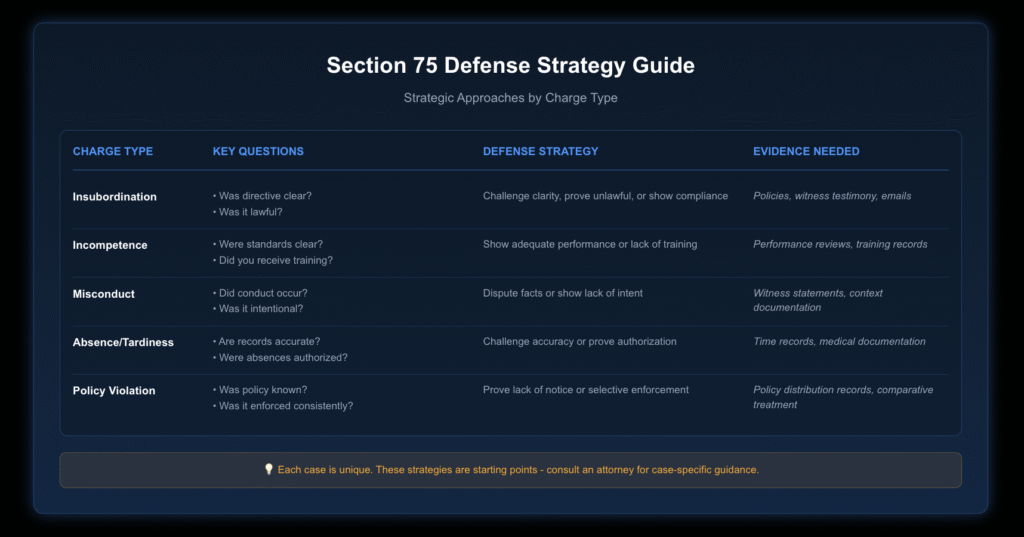
What is Considered Insubordination?
Insubordination typically requires three elements: a clear directive from a supervisor, your awareness of the directive, and intentional refusal to comply. The directive must be lawful, reasonable, and within the supervisor’s authority. Refusing illegal orders or discriminatory demands doesn’t constitute insubordination.
Context matters in insubordination cases. Questioning a directive, seeking clarification, or expressing concerns typically doesn’t rise to insubordination. The refusal must be clear and deliberate, not a misunderstanding or good-faith disagreement about implementation methods.
Past practice and workplace culture influence insubordination determinations. If informal communication patterns exist or supervisors historically tolerated certain behaviors, suddenly enforcing strict compliance may be deemed unreasonable.
What Questions Are Asked in a Disciplinary Hearing?
Hearing officers typically explore the factual basis for each charge through detailed questioning. Expect questions about specific dates, times, locations, and individuals involved in alleged incidents. You’ll be asked to explain your actions, decisions, and any documents or communications related to the charges.
What About Your Understanding of Policies?
Questions often probe your understanding of relevant policies, procedures, and job expectations. The hearing officer may ask about training you received, previous counseling or warnings, and your awareness of performance standards. Be prepared to discuss your employment history, including commendations, evaluations, and any prior disciplinary actions.
How Challenging Is Cross-Examination?
Cross-examination by the employer’s representative can be challenging. They may attempt to elicit admissions, highlight inconsistencies, or portray your actions unfavorably. Listen carefully to each question, take time to consider your response, and answer only what’s asked without elaborating unnecessarily.
How to Defend Yourself Against Gross Misconduct?
Gross misconduct charges require heightened preparation due to severe potential consequences. These charges typically involve allegations of criminal behavior, severe policy violations, or actions that fundamentally breach employment trust. The employer must meet a higher standard in proving such serious allegations.
How Do You Challenge the “Gross” Characterization?
Challenge the characterization of conduct as “gross” by demonstrating mitigating factors. Show that actions resulted from misunderstanding, inadequate training, or systemic failures rather than willful misconduct. Evidence of disparate treatment can undermine gross misconduct charges if others engaged in similar behavior without facing severe consequences.
What Evidence Counters Gross Misconduct Claims?
Present evidence of your overall employment record, including years of satisfactory service, commendations, and positive evaluations. Character witnesses who can attest to your integrity and professionalism provide powerful counter-narratives to gross misconduct allegations.
What Evidence Do I Need for a Section 75 Claim?
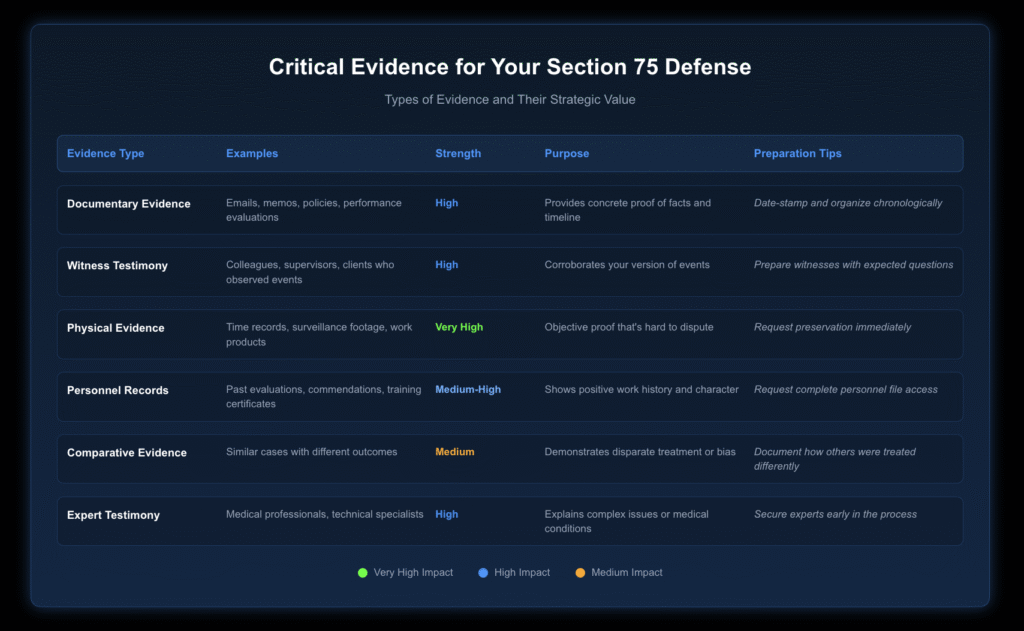
Documentary evidence forms the backbone of your defense. Gather emails, memoranda, policies, training materials, and any written communications relevant to the charges. Personnel files, performance evaluations, and commendations demonstrate your employment history and counter claims of persistent problems.
What Role Do Witnesses Play in Your Defense?
Witness testimony provides crucial support for your version of events. Identify colleagues who observed relevant incidents or can attest to workplace practices, your character, or disparate treatment. Prepare witnesses by reviewing their expected testimony and ensuring they understand the hearing process.
What Physical Evidence Should You Gather?
Physical evidence might include time records, surveillance footage, computer logs, or work products that contradict the charges. If claiming retaliation after protected whistleblowing activities, document the timeline between protected activities and adverse actions.
What is the 7 Minute Rule in NY?
The “7-minute rule” refers to specific payroll provisions regarding time recording. Under certain collective bargaining agreements, employees aren’t considered late if arriving within 7 minutes after their scheduled start time. However, this rule varies by agency and bargaining unit.
Understanding your specific agency’s time and attendance policies is crucial when facing charges related to tardiness or absence. Some agencies strictly enforce exact start times, while others follow more flexible interpretations. Review your collective bargaining agreement and agency policies to understand applicable standards.
How Does Section 75 Work?
The Section 75 process begins when an appointing authority serves written charges specifying alleged incompetence or misconduct. You receive at least 8 days to prepare and can request representation. The employer must provide access to relevant documents and witness lists before the hearing.
What Happens During the Hearing Itself?
During the hearing, the employer presents its case first, calling witnesses and introducing evidence. You then present your defense, including witness testimony and documentary evidence. Both sides can cross-examine witnesses. The hearing officer maintains a record and ensures procedural fairness throughout proceedings.
What Occurs After the Hearing Concludes?
After the closing arguments, the hearing officer reviews evidence and issues findings and recommendations. The appointing authority makes the final determination on guilt and any penalties. This decision becomes subject to judicial review through Article 78 proceedings if you disagree with the outcome.
How Long Does a Section 75 Take to Resolve?
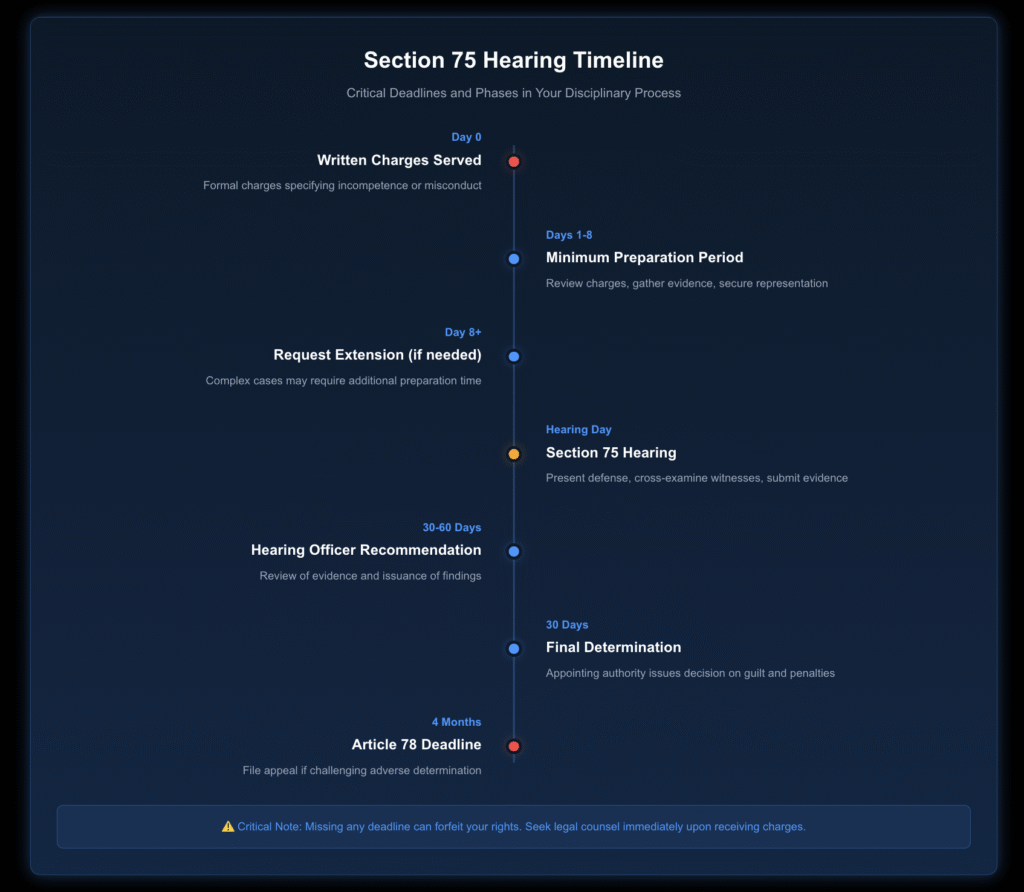
Section 75 proceedings typically span several months from charges to final determination. Initial preparation and scheduling usually take 2-4 weeks. The hearing itself might last one day for simple cases or extend over multiple sessions for complex matters involving numerous witnesses and extensive evidence.
Post-hearing procedures add significant time. The hearing officer generally has 30-60 days to issue findings and recommendations. The appointing authority then reviews these recommendations and issues a final determination, typically within 30 days. Overall, expect 3-6 months for standard cases, though complex matters can extend beyond a year.
Expedited procedures exist for certain situations, particularly when employees face suspension without pay. Courts have emphasized that prolonged suspensions without resolution violate due process rights.
How to Win a Section 75 Claim?
Winning requires thorough preparation, strategic presentation, and often, skilled representation. Focus on creating reasonable doubt about the charges rather than proving absolute innocence. Highlight procedural violations, such as inadequate notice, denied access to evidence, or biased decision-makers.
How Important Are Proportionate Penalties?
Demonstrate that the alleged conduct doesn’t warrant the proposed penalty even if some wrongdoing occurred. New York law requires penalties to be proportionate to offenses. Evidence of progressive discipline policies, past practice, and treatment of similarly situated employees supports arguments for lesser penalties.
When Should You Consider Settlement?
Consider negotiating settlement agreements before the hearing concludes. Settlements might involve reduced penalties, resignation with neutral references, or other mutually acceptable terms. Evaluate settlement offers carefully against the strength of your case and potential hearing outcomes.
What Legal Rights Does Article 75 Provide?
Article 75 guarantees fundamental due process rights, including notice of charges, opportunity to respond, and an impartial hearing. You’re entitled to representation by an attorney or union representative throughout proceedings. The right to confront witnesses and present evidence ensures a meaningful opportunity to defend against charges.
What Protection Against Arbitrary Discipline Exists?
The statute provides protection against arbitrary dismissal by requiring just cause for discipline. Employers must prove charges through competent evidence, not mere suspicion or personal animosity. This protection extends to all forms of discipline, including suspension, demotion, fine, or termination.
What Procedural Safeguards Are You Entitled To?
Procedural safeguards include access to relevant documents, witness lists, and a reasonable time for preparation. You can request subpoenas for witnesses or documents essential to your defense. The hearing must be recorded, creating a reviewable record for potential appeals.
Can a Section 75 Claim Be Rejected?
Employers can reject Section 75 claims in limited circumstances. Probationary employees lack Section 75 protection, as do certain provisional or temporary appointees. Employees who resign or retire before charges are filed may lose procedural protections.
What Are the Time Limits for Filing Charges?
Jurisdictional challenges might arise if charges are filed after the statute of limitations expires. Generally, charges must be filed within 18 months of discovering alleged misconduct. However, certain serious offenses may have longer limitation periods.
Can You Waive Your Section 75 Rights?
Settlement agreements or plea bargains can waive Section 75 rights. Employees might agree to resign or accept certain penalties in exchange for avoiding formal proceedings. Such agreements require careful consideration, as waivers are generally irrevocable once executed.
How Do You Know if Your Dispute is Approved?
The appointing authority issues a written determination after reviewing the hearing officer’s findings and recommendations. This determination specifies whether charges are sustained, dismissed, or modified, along with any imposed penalties. You should receive this decision within 30-60 days after the hearing concludes.
If charges are sustained, the determination explains the factual findings supporting guilt and the rationale for selected penalties. When charges are dismissed or modified, the determination outlines reasons for rejecting or altering the hearing officer’s recommendations.
The determination letter includes information about appeal rights and deadlines. In New York, you typically have four months to file an Article 78 petition challenging adverse determinations. Missing this deadline generally forfeits appeal rights, making timely action crucial.
Taking Action to Protect Your Career
Facing Section 75 charges threatens your livelihood, reputation, and future employment prospects. The complex procedural requirements and high stakes make professional legal representation invaluable. An experienced employment attorney can identify weaknesses in the employer’s case, ensure procedural compliance, and negotiate favorable resolutions when appropriate.
Don’t navigate this challenging process alone. Contact Nisar Law Group today for a consultation about your Section 75 hearing. Our attorneys understand civil service law intricacies and can develop strategic defenses tailored to your specific situation. Time is critical – early intervention often leads to better outcomes in disciplinary proceedings.
Frequently Asked Questions About Section 75 Hearing Preparation
Start by obtaining copies of all charges, specifications, and supporting documents from your employer. Review your personnel file, gather evidence supporting your defense, and identify potential witnesses. Create a timeline of events and prepare written responses to each charge. Consider consulting with an attorney or union representative who understands Section 75 procedures to develop an effective defense strategy.
New York law provides a minimum of 8 days between receiving charges and your hearing date. However, reasonable preparation time depends on case complexity, number of charges, and volume of evidence. You can request extensions if you need additional time to gather evidence, secure witnesses, or retain representation. Courts have granted weeks or months for particularly complex cases.
Avoid making speculative statements, admitting to things you didn’t do, or discussing matters outside your direct knowledge. Don’t use absolute terms like “always” or “never” unless completely accurate. Refrain from emotional outbursts, threats, or disparaging comments about supervisors. Stick to factual information you can verify, and ask for clarification if questions are unclear.
Expect detailed questions about specific incidents mentioned in charges, including dates, times, locations, and people involved. You’ll be asked about your understanding of relevant policies, any training received, and previous warnings or counseling. The hearing officer may explore your work history, relationships with supervisors, and explanations for alleged conduct. Be prepared for hypothetical questions testing your understanding of job requirements.
Collect emails, memos, policies, and written communications related to the charges. Gather performance evaluations, commendations, and evidence of satisfactory work history. Identify witnesses who can support your version of events or testify about workplace practices. Document any evidence of disparate treatment, retaliation for whistleblowing, or procedural violations that strengthen your defense.
Article 75 guarantees notice of specific charges, at least 8 days to prepare a defense, and the right to a hearing before an impartial hearing officer. You’re entitled to representation, can call and cross-examine witnesses, and present evidence. The employer bears the burden of proving charges by a preponderance of evidence. You also have the right to appeal adverse determinations through Article 78 proceedings.
Most Section 75 proceedings conclude within 3-6 months from initial charges to final determination. Simple cases might resolve faster, while complex matters involving multiple charges and extensive evidence can extend beyond a year. The timeline includes preparation time (2-4 weeks), the hearing itself (1-5 days), hearing officer recommendations (30-60 days), and final determination (30 days).
Section 75 protections don’t apply to probationary employees, provisional appointees who haven’t achieved permanent status, or certain temporary workers. Claims can be rejected if filed after the applicable statute of limitations or if employees resign before charges are served. Additionally, employees can waive Section 75 rights through settlement agreements or plea bargains, accepting certain penalties.
