

National Guard and Reserve members have robust federal and state employment protections that safeguard their civilian careers during military service. The Uniformed Services Employment and Reemployment Rights Act (USERRA) serves as the primary federal law protecting these service members, while the Servicemembers Civil Relief Act (SCRA) provides additional financial and legal safeguards. In New York, state and city laws extend these protections even further, giving Guard and Reserve personnel some of the strongest workplace rights in the nation. If your employer has discriminated against you because of your military service, retaliated against you for taking military leave, or failed to properly reinstate you after activation, you have legal remedies available.
Key Takeaways
- USERRA protects National Guard and Reserve members from employment discrimination based on military service and guarantees reemployment rights after duty.
- Guard and Reserve personnel must receive the same position, seniority, and pay rate they would have attained had they remained continuously employed.
- Employers cannot deny hiring, promotion, or any employment benefit based on current, past, or future military service.
- The Servicemembers Civil Relief Act provides financial protections, including interest rate caps during activation.
- New York State and NYC laws provide additional protections beyond federal minimums, including paid military leave for public employees.
- Reemployment timelines vary based on length of service: same-day return for duty under 31 days, up to 90 days for longer activations.
Disclaimer: This article provides general information for informational purposes only and should not be considered a substitute for legal advice. It is essential to consult with an experienced employment lawyer at our law firm to discuss the specific facts of your case and understand your legal rights and options. This information does not create an attorney-client relationship.
How Does USERRA Protect National Guard and Reserve Members?
The Uniformed Services Employment and Reemployment Rights Act creates a comprehensive framework of employment protections for all service members, including National Guard and Reserve personnel. This federal law applies to virtually all employers regardless of size, including private companies, federal agencies, and state and local governments.
What Reemployment Rights Do Guard and Reserve Members Have?
USERRA establishes what’s known as the “escalator principle” for reemployment. When you return from military duty, you’re entitled to the position you would have attained had you remained continuously employed throughout your absence. This isn’t just your old job—it’s the job you would have earned through normal progression, including promotions and pay increases.
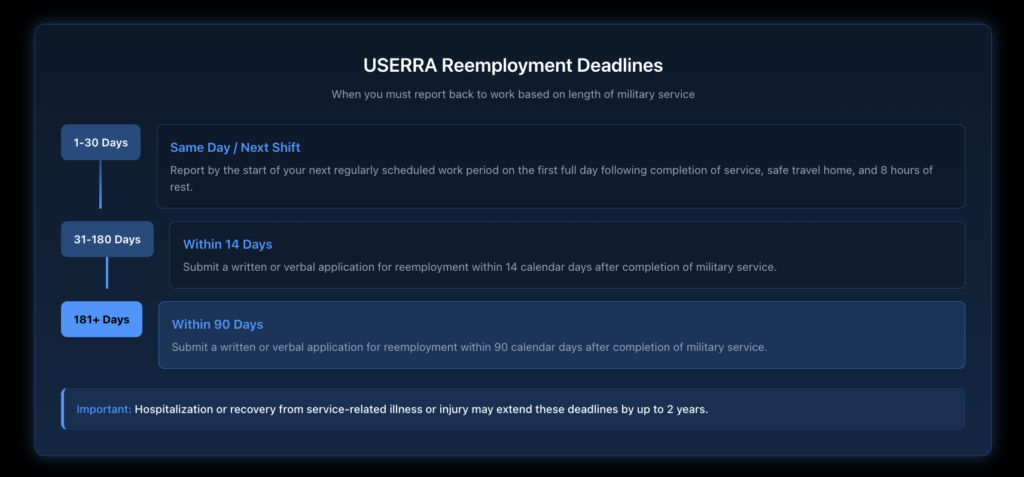
For Guard and Reserve members specifically, the reemployment timeline depends on the length of your military leave. Service lasting fewer than 31 days requires you to report back to work by the start of your next regularly scheduled work period following safe travel home, plus eight hours of rest. For service lasting 31 to 180 days, you must submit a reemployment application within 14 days. Longer activations give you up to 90 days to apply for reemployment.
What Qualifies as Covered Military Service Under USERRA?
USERRA protections extend to numerous types of duties that Guard and Reserve members commonly perform. Active duty, active duty for training, initial active duty for training, inactive duty training (weekend drills), full-time National Guard duty, and examinations for fitness to perform any of these duties all qualify. Even attending service schools or additional training outside your normal drill schedule counts as protected service under USERRA.
The Department of Labor’s Veterans’ Employment and Training Service administers USERRA and provides resources for understanding your rights. Importantly, USERRA applies regardless of whether your service is voluntary or involuntary, and it protects you in peacetime just as it does during war.
What Anti-Discrimination Protections Apply to Guard and Reserve Personnel?
Beyond reemployment rights, USERRA creates robust protections against discrimination based on military service or status. Employers cannot use your Guard or Reserve membership as a factor in any employment decision, whether that’s hiring, promotion, retention, or any other benefit of employment.
What Actions Constitute Military Status Discrimination?
Discrimination against Guard and Reserve members takes many forms in the workplace. An employer who refuses to hire a qualified candidate because they’re concerned about potential activations violates USERRA. Similarly, passing over a Guard member for promotion because weekend drills occasionally conflict with work schedules constitutes illegal discrimination. The Equal Employment Opportunity Commission works alongside the Department of Labor to enforce these protections.
Subtler forms of discrimination also violate the law. Negative performance reviews timed around military duty, exclusion from training opportunities, or hostile comments about military obligations can all form the basis for a discrimination claim. Employers who express frustration about accommodating your service or suggest your military commitment makes you less dedicated to your job are creating evidence of discriminatory intent.
How Does USERRA Protect Against Retaliation?
USERRA contains strong anti-retaliation provisions that protect service members who assert their rights. If you request military leave, file a USERRA complaint, testify in a USERRA proceeding, or assist in an investigation, your employer cannot take adverse action against you because of that protected activity. The military discrimination protections available under federal law create multiple avenues for holding employers accountable.

What Financial Protections Does the SCRA Provide During Activation?
The Servicemembers Civil Relief Act provides critical financial protections for Guard and Reserve members called to active duty. While USERRA focuses on your employment relationship, the SCRA addresses the broader financial stress that activation can create.
Who Qualifies for SCRA Coverage?
SCRA protections apply to Reserve component members when serving on active duty and National Guard members mobilized under federal orders for more than 30 consecutive days. This covers federal activations under Title 10 or Title 32 of the United States Code. Importantly, SCRA protections typically begin when you receive your orders, not when you actually report for duty.
What Interest Rate Protections Does the SCRA Provide?
One of the most valuable SCRA benefits is the six percent interest rate cap on pre-service debts. If you have credit cards, auto loans, mortgages, or other obligations from before your activation, you can request that the interest rate be reduced to no more than six percent during your active service period. For mortgages specifically, this cap extends for one year after your service ends. Lenders cannot deny you this benefit if you provide written notice along with a copy of your military orders.
How Does the SCRA Protect Against Default Judgments?
Guard and Reserve members activated to federal service receive protection from default judgments in civil proceedings. Courts must appoint an attorney to represent you before entering any default judgment, and you can request stays of proceedings when your military service materially affects your ability to participate. This protection extends to child custody proceedings, debt collection lawsuits, foreclosures, and other civil matters.
What Additional Protections Does New York Provide?
New York State law provides employment and reemployment protections for Guard and Reserve members that exceed federal minimums in several important ways. State Military Law Section 242 grants public employees up to 30 days (or 22 working days, whichever is greater) of paid military leave per calendar year.
How Do New York State Protections Exceed Federal Law?
While USERRA doesn’t require employers to pay you during military leave, New York mandates paid leave for state and municipal employees. Section 242 also protects against loss of seniority, increments, or any other workplace benefits during military absence. Public employees returning from military service in New York are entitled to the same salary they would be receiving had they remained continuously employed.
New York State Human Rights Law explicitly prohibits discrimination based on military status, covering private employers as well as public agencies. This state-level protection provides an additional avenue for claims when federal remedies may be insufficient.
What Special Protections Does New York City Offer?
The New York City Human Rights Law provides even broader protections for Guard and Reserve members. Since November 2017, uniformed service status has been a protected class under city law, covering current and former members of all military branches, including the Reserves and National Guard. NYC law prohibits discrimination in employment, housing, and public accommodations based on your service status.
New York City allows discrimination complaints to be filed within one year of the alleged violation (or three years for gender-based harassment), and the city’s Commission on Human Rights actively investigates these claims. This local enforcement option can sometimes provide faster resolution than federal administrative processes.
What Are Your Employer's Obligations When You're Called to Duty?
Employers have specific responsibilities when a Guard or Reserve employee receives orders for military service. Understanding these obligations helps you recognize when your rights are being violated.
What Notice Must You Provide Before Military Leave?
While USERRA requires advance notice of military service, the law recognizes that military necessity sometimes makes notice impossible or unreasonable. Written notice is preferred but not required—verbal notice satisfies the statute. You don’t need to provide a specific amount of notice, and you’re not required to wait for your employer’s approval before departing. The USERRA reemployment rights framework places the burden on employers to accommodate your service, not on you to seek permission.
How Must Employers Handle Benefits During Your Absence?
Your benefits continuation during military service includes important health insurance protections. You can elect to continue employer-provided health coverage for up to 24 months during military service, though you may be required to pay up to 102 percent of the full premium for coverage beyond 31 days. Upon reemployment, health coverage must be reinstated immediately with no waiting periods or exclusions for pre-existing conditions (except for service-connected conditions).
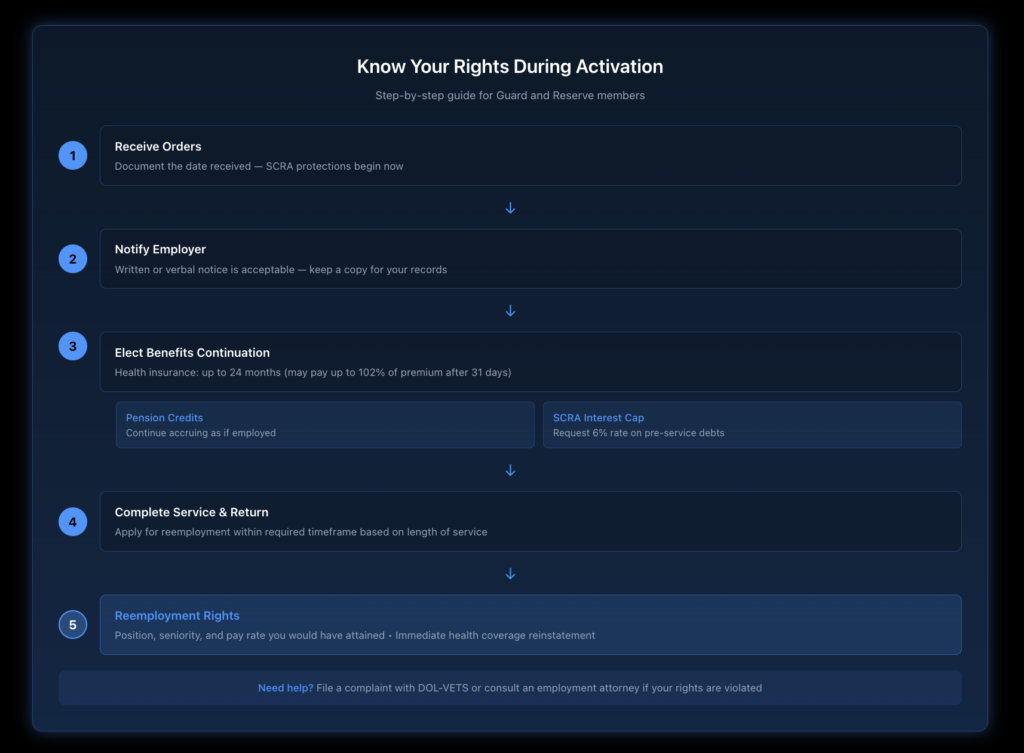
Pension and retirement benefits also continue accruing as if you remained employed. USERRA treats your military service time as continuous employment for vesting and benefit accrual purposes. Upon return, you’re entitled to any employer contributions that would have been made had you remained working.
What Should You Do If Your Employer Violates Your Rights?
When employers fail to comply with USERRA, SCRA, or state military protection laws, you have several options for enforcing your rights.
How Do You File a USERRA Complaint?
The Department of Labor’s Veterans’ Employment and Training Service investigates USERRA complaints. You can file online through the VETS website or contact them directly. VETS will investigate your complaint, attempt to resolve it, and if necessary, refer it to the Department of Justice for litigation against private employers or the Office of Special Counsel for federal employer violations.
What Remedies Are Available for USERRA Violations?
Successful USERRA claims can result in reinstatement to your position, back pay for lost wages and benefits, restoration of seniority and pension credits, and liquidated damages equal to your back pay for willful violations. Attorney’s fees and litigation costs can also be recovered. The wrongful termination of military personnel represents one of the most serious USERRA violations and can result in substantial damages.
You can also bypass the administrative process entirely and file a lawsuit directly in federal or state court. While USERRA has no explicit statute of limitations, some courts have applied the four-year federal “catch-all” limitations period, so prompt action is advisable.
How Can You Protect Yourself Proactively?
Documentation remains your best protection against potential employer violations. Maintain copies of all military orders, leave requests, correspondence with your employer, and any documentation of your employment status before, during, and after military service.
What Records Should You Keep?
Save all written communications about your military service with your employer. Keep copies of performance reviews from before and after activations. Document any comments supervisors or coworkers make about your military obligations. If you notice changes in how you’re treated after returning from duty or announcing upcoming service, note the dates and specifics.
The veterans’ preference in employment programs available in many government positions provides additional job security, but even these protections work best when you’ve maintained thorough records of your service and employment history.
What Should You Tell Your Employer?
While you’re not required to provide extensive documentation with your leave request, giving your employer reasonable notice helps establish good faith on your part. A simple written statement that you’re leaving for military service, along with the approximate duration and a copy of your orders when available, creates a clear record. For shorter drill periods or annual training, establish a regular communication pattern with your supervisor about your military schedule.
When Should You Seek Legal Assistance?
If your employer has denied reemployment, reduced your position or pay upon return, discriminated against you due to military service, or retaliated against you for exercising your USERRA rights, consulting with an employment attorney experienced in military discrimination cases is advisable. The accommodations for service-connected disabilities provide additional protections if you’ve returned with injuries or conditions related to your service.
Ready to Protect Your Rights?
If you’re a National Guard or Reserve member facing workplace discrimination, retaliation, or reemployment issues related to your military service, Nisar Law Group can help. Our employment law attorneys understand the unique challenges service members face in balancing civilian careers with military obligations. Contact us today for a consultation to discuss your situation and explore your legal options.
Frequently Asked Questions About National Guard and Reserve Employment Protections
No. USERRA explicitly prohibits employers from terminating, refusing to hire, or denying any employment benefit to someone because of their membership in or obligation to serve in the uniformed services. This protection covers your initial decision to join, your ongoing participation in drills and training, and any future activations. An employer who fires you because of concerns about potential deployments or training conflicts violates federal law.
USERRA does not require private employers to pay you during military leave, though many choose to offer differential pay as a benefit. However, New York public employees receive up to 30 days of paid military leave annually under State Military Law Section 242. You can also elect to use accrued vacation or paid time off during military leave, but your employer cannot force you to do so.
You can elect to continue employer-provided health insurance coverage for up to 24 months during military service. For absences of 30 days or less, you pay only your normal employee share of premiums. For longer absences, you may be required to pay up to 102 percent of the full premium. Upon return, your health coverage must be reinstated immediately without waiting periods or pre-existing condition exclusions except for service-connected conditions.
USERRA requires employers to reemploy you in an appropriate position based on the length of your service and your qualifications. There’s no specific time limit for how long they must hold a position open, but they must reemploy you promptly upon your timely return or application for reemployment. Your cumulative military service with one employer cannot exceed five years (with several exceptions) and still qualify for USERRA reemployment rights.
Yes, employers can request documentation of your military service, but only for purposes of establishing eligibility for USERRA protections. They cannot deny you reemployment while waiting for documentation if other evidence of service is available. Documentation requirements should not be used as a pretext to delay or deny your legitimate reemployment rights.
If you incur or aggravate a disability during military service, your employer must make reasonable efforts to accommodate your disability and help you qualify for the position you would have held. If you cannot qualify for that position even with reasonable accommodation, the employer must place you in a position of similar seniority, status, and pay for which you are qualified. The ADA provides additional protections that work alongside USERRA for service-connected disabilities.
Yes. USERRA protections apply to all uniformed services, including inactive duty training such as weekend drills. Your employer cannot take adverse action against you for attending regular drill periods, and they must excuse you from work to perform this duty. They cannot require you to find a replacement or swap shifts before approving your military obligation.
You can file a complaint with the Department of Labor’s Veterans’ Employment and Training Service online or by phone. VETS will investigate and attempt to resolve the complaint. If unsuccessful, your case can be referred to the Department of Justice for potential litigation. Alternatively, you can bypass the administrative process and file a lawsuit directly in federal or state court with your own attorney.

