

If you’ve experienced a miscarriage or stillbirth, you’re protected by multiple federal and state laws that guarantee your right to time off, job protection, and freedom from discrimination. Under the Family and Medical Leave Act, eligible employees can take up to 12 weeks of unpaid, job-protected leave because pregnancy loss qualifies as a “serious health condition.” The Pregnant Workers Fairness Act requires employers to provide reasonable accommodations for pregnancy-related conditions, including recovery from pregnancy loss. New York employees have additional protections through state temporary disability insurance and the New York State Human Rights Law, which covers all employers regardless of size.
Key Takeaways
- Pregnancy loss (miscarriage or stillbirth) qualifies as a “serious health condition” under FMLA, entitling eligible employees to up to 12 weeks of job-protected leave.
- The Pregnant Workers Fairness Act requires employers with 15+ employees to provide reasonable accommodations for pregnancy loss recovery.
- New York’s temporary disability insurance covers 2-8 weeks of partial wage replacement following pregnancy loss.
- Firing or demoting an employee because of pregnancy loss violates federal and state anti-discrimination laws.
- New York employees can file discrimination complaints with the state Division of Human Rights for up to one year, or with the NYC Commission on Human Rights for up to three years.
Disclaimer: This article provides general information for informational purposes only and should not be considered a substitute for legal advice. It is essential to consult with an experienced employment lawyer at our law firm to discuss the specific facts of your case and understand your legal rights and options. This information does not create an attorney-client relationship.
Does FMLA Cover Pregnancy Loss?
Yes. The FMLA explicitly recognizes pregnancy loss as a serious health condition that entitles eligible employees to job-protected leave. This applies whether you experienced a miscarriage early in pregnancy or a stillbirth later in the pregnancy.
Who Qualifies for FMLA Leave After a Miscarriage?
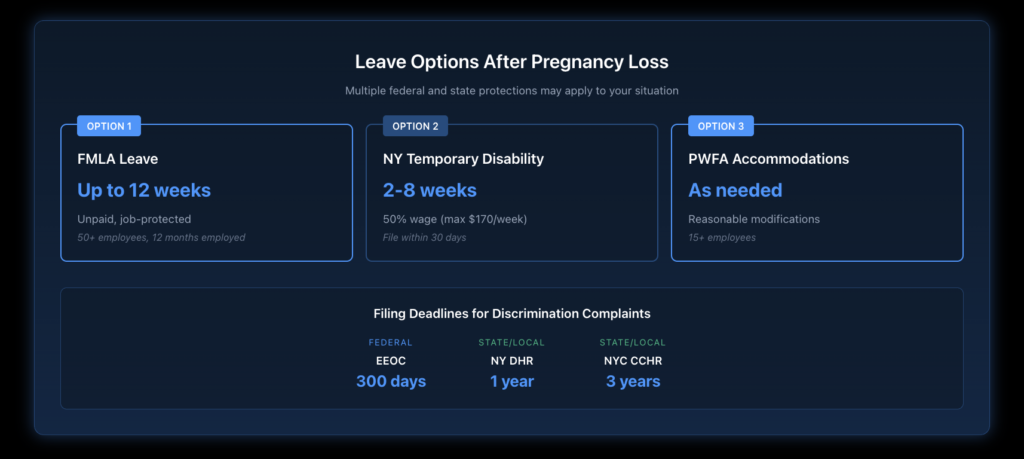
You’re eligible for FMLA leave if you’ve worked for your employer for at least 12 months, have logged at least 1,250 hours in the past year, and work at a location where your employer has 50 or more employees within a 75-mile radius. If you meet these requirements, your employer must allow you to take leave without losing your job or health insurance coverage.
How Much Time Can You Take Off Work After Pregnancy Loss?
Under FMLA, you can take up to 12 weeks of unpaid leave per year to recover from pregnancy loss. You don’t have to take all 12 weeks at once—you can use intermittent leave if you need time for medical appointments, follow-up procedures, or mental health treatment related to your loss. Your employer cannot penalize you for using this protected leave.
What Protections Does the Pregnant Workers Fairness Act Provide?
The PWFA requires employers with 15 or more employees to provide reasonable accommodations for known limitations related to pregnancy, childbirth, or related medical conditions—including miscarriage and stillbirth. This means your employer must work with you to find solutions that allow you to recover while maintaining your employment.
What Accommodations Can You Request After Pregnancy Loss?
Reasonable accommodations after pregnancy loss might include temporary schedule modifications, additional breaks, time off for medical appointments, remote work arrangements, or modified job duties. According to EEOC guidance, employers must engage in an “interactive process” to identify accommodations that meet your needs without causing undue hardship to the business.
Can Your Employer Require Documentation for Pregnancy Loss Accommodations?
Your employer may request supporting documentation in some circumstances, but the PWFA limits when and what employers can require. If your need for accommodation is obvious or you’re requesting simple modifications like additional breaks or time off, your employer generally shouldn’t demand extensive medical proof. You have the right to privacy regarding the details of your loss.
How Does the Pregnancy Discrimination Act Protect You?
The Pregnancy Discrimination Act prohibits employers from treating employees unfavorably because of pregnancy, childbirth, or related medical conditions, which includes pregnancy loss. If your employer fires you, demotes you, cuts your hours, or otherwise penalizes you because you had a miscarriage or needed time off to recover, that’s illegal discrimination.
What Actions Are Considered Pregnancy Loss Discrimination?
Discrimination after pregnancy loss can take many forms. Your employer cannot terminate your employment because you experienced a loss, refuse to hold your position while you’re on leave, deny you promotions or assignments because of the time you took off, or treat you differently than employees with other medical conditions. Even seemingly “sympathetic” actions like forcing you to take extended leave when you’re ready to return violate the law.

What Are Your Rights Under New York State Law?
New York provides some of the strongest protections for employees experiencing pregnancy loss. Unlike federal laws that only apply to larger employers, the New York State Human Rights Law covers all employers—even those with just one employee.
Does New York Disability Insurance Cover Pregnancy Loss?
Yes. New York’s temporary disability insurance program provides partial wage replacement for employees who cannot work due to pregnancy loss. According to state regulations, employees recovering from pregnancy loss in the second trimester or a stillbirth may receive disability benefits for 2-8 weeks, depending on medical certification. Benefits equal 50% of your average weekly wage, up to a maximum of $170 per week.
How Do You File for New York Disability Benefits After Pregnancy Loss?
To claim disability benefits, you must file Form DB-450 within 30 days of becoming disabled. Your healthcare provider must complete the medical certification section confirming that you’re unable to work due to your pregnancy loss. If your claim is denied, you can request a review by the Workers’ Compensation Board within 45 days of receiving the rejection notice.
Can You Be Fired for Taking Time Off After a Miscarriage?
No. If your employer terminates you because you experienced pregnancy loss or needed time off to recover, that’s illegal discrimination under federal and state law. The Pregnancy Discrimination Act protects employees from adverse employment actions based on pregnancy-related conditions. New York law provides even broader protections, covering employees at businesses of any size.
What Should You Do If You’re Fired After Pregnancy Loss?
Document everything. Keep copies of any communications about your leave, performance evaluations, and the termination notice. If your employer claims the firing was for performance reasons, but it happened shortly after your pregnancy loss, that timing may help prove pretextual termination. An employment attorney can evaluate whether you have a viable discrimination claim.
What Damages Can You Recover in a Pregnancy Loss Discrimination Case?
If you prove discrimination, you may be entitled to back pay, front pay, reinstatement to your position, compensatory damages for emotional distress, and potentially punitive damages. New York law allows for substantial damages in pregnancy discrimination cases, including uncapped compensatory damages under the NYC Human Rights Law.
How Do You File a Pregnancy Loss Discrimination Complaint?
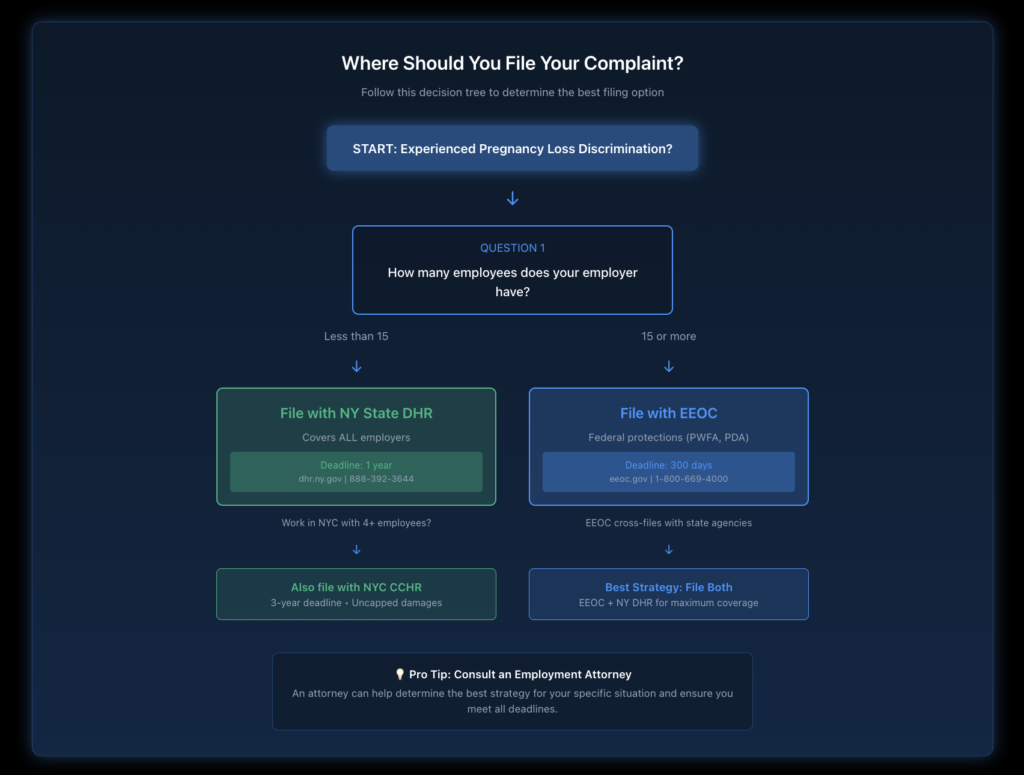
You have multiple options for filing a discrimination complaint, depending on your employer’s location and size. At the federal level, you can file with the EEOC within 300 days of the discriminatory act. In New York State, you can file with the Division of Human Rights within one year. If you work in New York City, the NYC Commission on Human Rights accepts complaints for up to three years.
What’s the Process for Filing an EEOC Charge?
To file an EEOC charge, you can submit online, by mail, or in person at your local EEOC office. The agency will investigate your claim and attempt mediation. If the EEOC finds reasonable cause to believe discrimination occurred, it may file suit on your behalf or issue a “right to sue” letter allowing you to pursue the case in court.
Should You File with State or Federal Agencies?
Many employees file with both agencies simultaneously through “work-sharing agreements” that allow the agencies to cross-file charges. Filing with New York state agencies offers advantages like broader coverage (all employers instead of just those with 15+ employees) and longer filing deadlines. Consulting with an attorney who handles pregnancy discrimination cases can help you determine the best strategy for your situation.
What Other Leave Options Exist After Pregnancy Loss?
Beyond FMLA and disability insurance, you may have access to additional leave benefits. New York Paid Family Leave provides job-protected time off for bonding with a new child, though it doesn’t specifically cover pregnancy loss recovery. However, if you need leave to care for a family member with a serious health condition—including a spouse recovering from pregnancy loss—you may qualify.
Can You Use Sick Leave for Pregnancy Loss Recovery?
Yes. If your employer provides paid sick leave, you can use it for recovery from pregnancy loss. New York City’s paid sick leave law requires employers to provide up to 40-56 hours of paid sick time annually, depending on employer size. Your employer cannot deny sick leave for pregnancy-related conditions or require you to provide excessive documentation.
What About Bereavement Leave After Stillbirth?
While there’s no federal requirement for bereavement leave, some employers include stillbirth in their bereavement policies. Check your employee handbook or ask HR about available options. Even if formal bereavement leave isn’t offered, you may be able to use FMLA leave to address both the physical and emotional aspects of your loss.
How Can You Protect Your Job While Recovering?
Communication is key. Notify your employer promptly about your need for leave and keep records of all communications. Request pregnancy-related accommodations in writing when possible, and document your employer’s responses. If you’re covered by FMLA, submit the required certification forms within the timeframes your employer specifies.
What If Your Employer Doesn’t Know About FMLA Protections?
Some smaller employers may not be familiar with their obligations under pregnancy discrimination laws. According to A Better Balance, studies show that 77% of employees don’t know FMLA covers pregnancy loss, and many employers fail to communicate these rights. You can educate your HR department about your legal protections, but if they still refuse to comply, consulting an attorney may be necessary.
How Do You Document Potential Discrimination?
Keep a detailed record of any negative treatment you experience after disclosing your pregnancy loss or requesting leave. Save emails, text messages, and written evaluations. Note the dates, times, and witnesses to any verbal comments or actions that seem discriminatory. This documentation becomes crucial evidence if you need to file a complaint or lawsuit later.
Need Legal Help After Pregnancy Loss Discrimination?
Experiencing pregnancy loss is difficult enough without facing workplace discrimination on top of it. If your employer has denied you leave, fired you after your loss, refused reasonable accommodations, or otherwise treated you unfairly, you have legal options. The employment attorneys at Nisar Law Group have extensive experience protecting the rights of employees facing pregnancy discrimination across New York and New Jersey. Contact us today for a confidential consultation about your situation.
Frequently Asked Questions About Pregnancy Loss and Employment Rights
You may have grounds for a lawsuit if your employer contributed to unsafe working conditions that caused your loss, or if they discriminated against you afterward. However, workers’ compensation typically covers on-the-job injuries, and proving the employer’s negligence directly caused a miscarriage is challenging. Most pregnancy loss discrimination cases focus on how the employer treated you after the loss—such as firing you, denying leave, or refusing accommodations. An employment attorney can evaluate the specific facts of your situation.
The amount of leave depends on which laws apply to your situation and your individual recovery needs. FMLA provides up to 12 weeks of unpaid, job-protected leave if you’re eligible. New York’s temporary disability insurance covers 2-8 weeks with partial pay. Your doctor determines how long you’re actually unable to work, and your employer must honor legitimate medical restrictions. You should receive at least as much leave as employees with other medical conditions receive.
Yes, absolutely. Pregnancy loss qualifies as a “serious health condition” under FMLA, entitling eligible employees to up to 12 weeks of job-protected leave. You can use this leave intermittently for medical appointments, recovery, or mental health treatment related to your loss. Both the employee who experienced the loss and their spouse may be eligible for FMLA leave—the spouse can take leave to care for a family member with a serious health condition.
The Pregnant Workers Fairness Act, which took effect in June 2023, strengthened protections for employees experiencing pregnancy loss. It requires employers with 15 or more employees to provide reasonable accommodations—including time off—for pregnancy-related conditions like miscarriage recovery. Some states have also expanded protections recently. New York expanded temporary disability coverage in 2024 to specifically include recovery from pregnancy loss and stillbirth for 2-8 weeks.
In states with temporary disability insurance programs—including New York, California, New Jersey, Rhode Island, and Hawaii—pregnancy loss typically qualifies for short-term disability benefits. In New York, you can receive 50% of your average weekly wage (up to $170/week) for the duration your doctor certifies you’re unable to work. You must file within 30 days and provide medical documentation. Private short-term disability policies may also cover pregnancy loss if you have coverage through your employer.
Pregnancy discrimination after a loss includes any adverse employment action based on your pregnancy loss or related medical needs. Examples include termination, demotion, reduced hours, denied promotions, harassment, failure to provide reasonable accommodations, requiring you to take more leave than medically necessary, or treating you less favorably than employees with non-pregnancy-related medical conditions. Both obvious discrimination and subtle differential treatment violate the law.
Traditional “maternity leave” is typically designed for caring for a newborn, but pregnancy loss entitles you to medical leave under FMLA and potentially disability benefits. You receive leave for your own serious health condition (the pregnancy loss), not parental bonding leave. The amount of leave depends on your medical recovery needs. Some progressive employers have begun offering specific bereavement or pregnancy loss leave policies that provide additional time beyond standard medical leave.
New York provides comprehensive protections for employees after pregnancy loss. You’re protected from discrimination by the NY State Human Rights Law regardless of employer size. You may receive 2-8 weeks of partial wage replacement through temporary disability insurance. The NYC Human Rights Law provides even broader protections with a three-year filing deadline. You have the right to reasonable accommodations during recovery, protection from retaliation for asserting your rights, and access to any leave benefits your employer provides for other medical conditions.
