

If your employer is paying you less than the legally required minimum wage, you have significant legal protections and remedies available to you. The Fair Labor Standards Act (FLSA) establishes a federal minimum wage floor, while New York State and New York City provide even stronger protections with higher minimum wage rates. When employers violate these laws, workers can recover not only their unpaid wages but also liquidated damages that effectively double their recovery, plus attorneys’ fees and costs.
Key Takeaways
- The federal minimum wage is $7.25 per hour, but New York City’s minimum wage is $17.00 per hour as of January 2026—employers must pay whichever rate is higher.
- Workers can recover unpaid wages plus an equal amount in liquidated damages, effectively doubling their recovery.
- You have multiple options for filing claims: federal DOL, New York State DOL, or a private lawsuit.
- The statute of limitations is 2 years for regular violations and 3 years for willful violations under federal law.
- Wage theft costs American workers an estimated $15 billion or more annually in minimum wage violations alone.
Disclaimer: This article provides general information for informational purposes only and should not be considered a substitute for legal advice. It is essential to consult with an experienced employment lawyer at our law firm to discuss the specific facts of your case and understand your legal rights and options. This information does not create an attorney-client relationship.
What Exactly Constitutes a Minimum Wage Violation?
A minimum wage violation occurs whenever an employer pays a worker less than the applicable minimum wage rate for hours worked. This sounds straightforward, but violations often happen in less obvious ways.
What Are the Most Common Types of Minimum Wage Violations?
The most common forms of minimum wage violations include paying a straight hourly rate below the legal minimum, improperly calculating the tipped employee’s cash wage, making illegal deductions from paychecks that reduce effective pay below minimum wage, and failing to pay for all hours actually worked.
Employers sometimes pay piece rates or day rates that work out to less than minimum wage when divided by actual hours worked. Others make deductions for uniforms, tools, or cash register shortages that push workers below the wage floor. These practices violate federal and state labor law standards.
How Do Tip Credit Violations Work?
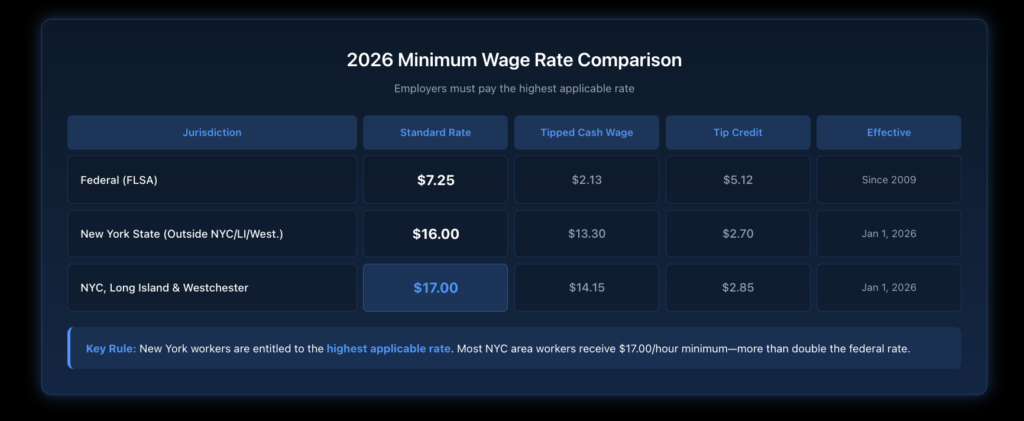
For tipped employees in the hospitality industry, employers can take a “tip credit” against the minimum wage—but only if certain conditions are met. In New York City as of 2026, employers must pay tipped food service workers at least $11.35 per hour in cash wages, with a $5.65 tip credit, ensuring total compensation meets the $17.00 minimum.
Violations occur when employers take a tip credit without meeting the legal requirements, when tips don’t actually bring the worker’s total compensation up to minimum wage, or when employers illegally retain worker tips. Understanding your overtime calculation rights is also essential since tip credit rules interact with overtime requirements.
What Are the Current Minimum Wage Rates You Should Know?
Understanding the applicable minimum wage rates is the first step in determining whether you’re being paid legally. Multiple jurisdictions may apply to your situation, and you’re entitled to the highest applicable rate.
What Is the Federal Minimum Wage?
The federal minimum wage under the Fair Labor Standards Act remains at $7.25 per hour, unchanged since 2009. While Congress has considered various proposals to increase this rate, it remains the baseline that applies nationwide. The FLSA coverage rules determine which workers are protected by federal wage law.
What Are New York’s Minimum Wage Requirements?
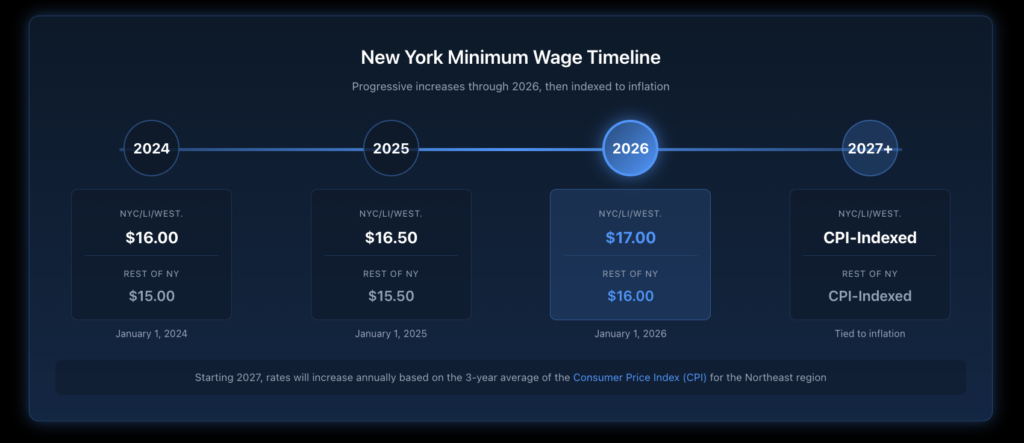
New York provides substantially stronger protections than federal law. As of January 1, 2026, the minimum wage rates in New York are:
New York City, Long Island (Nassau and Suffolk Counties), and Westchester County: $17.00 per hour
Remainder of New York State: $16.00 per hour
Starting in 2027, New York’s minimum wage will be indexed to inflation based on a three-year average of the Consumer Price Index for the Northeast region. This means automatic annual increases tied to the cost of living.
Which Minimum Wage Rate Applies to Your Job?
The general rule is simple: your employer must pay whichever rate is highest among federal, state, and local minimums. For most New York workers, this means the New York rate applies. The location where you perform your work determines which geographic rate applies, not where your employer is headquartered.
Some industries have special rates. Home care aides have higher minimums ($19.65 downstate, $18.65 upstate in 2026). Fast food workers at large chains must receive at least $16.00 per hour. Knowing your exempt vs. non-exempt classification determines whether you’re entitled to minimum wage at all.
What Evidence Do You Need to Prove a Minimum Wage Violation?
Building a strong case requires documentation. While your employer has legal obligations to maintain payroll records, you should keep your own records as well.
What Records Should You Keep?
Document your hours worked each day, including start and end times. Save all pay stubs, even electronic versions. Keep copies of your employment agreement, job description, and any communications about pay. Note any times you worked but weren’t compensated, including pre-shift preparation, post-shift cleanup, or work performed during unpaid meal breaks.
If you’re paid in cash or your employer doesn’t provide pay stubs, create a contemporaneous log of hours worked and amounts received. Courts give significant weight to employee records when employers fail to maintain proper documentation.
How Can You Calculate Whether You’ve Been Underpaid?
To determine if you’re experiencing a violation, divide your total weekly pay by total hours worked. If that number falls below the applicable minimum wage, you have a potential claim. Remember to account for all compensable time, not just scheduled hours.
For tipped employees, add your cash wages plus actual tips received. If that total divided by hours worked falls below minimum wage, your employer must make up the difference. Understanding off-the-clock work issues is critical since unpaid time can push your effective hourly rate below legal minimums.
What Remedies Are Available for Minimum Wage Violations?
The law provides substantial remedies designed to compensate workers and deter employer violations.
What Damages Can You Recover?
Under federal law, you can recover:
Back wages: The actual amount you were underpaid
Liquidated damages: An additional equal amount to your back wages (effectively doubling your recovery)
Attorney’s fees and costs: The losing employer pays your legal fees
New York law provides even stronger remedies. The New York State Department of Labor can require employers to pay underpayments, liquidated damages, plus interest and civil penalties up to 200% of the unpaid wages. Understanding the full scope of wage and hour protections helps you pursue maximum recovery.
What Is the Statute of Limitations for Filing a Claim?
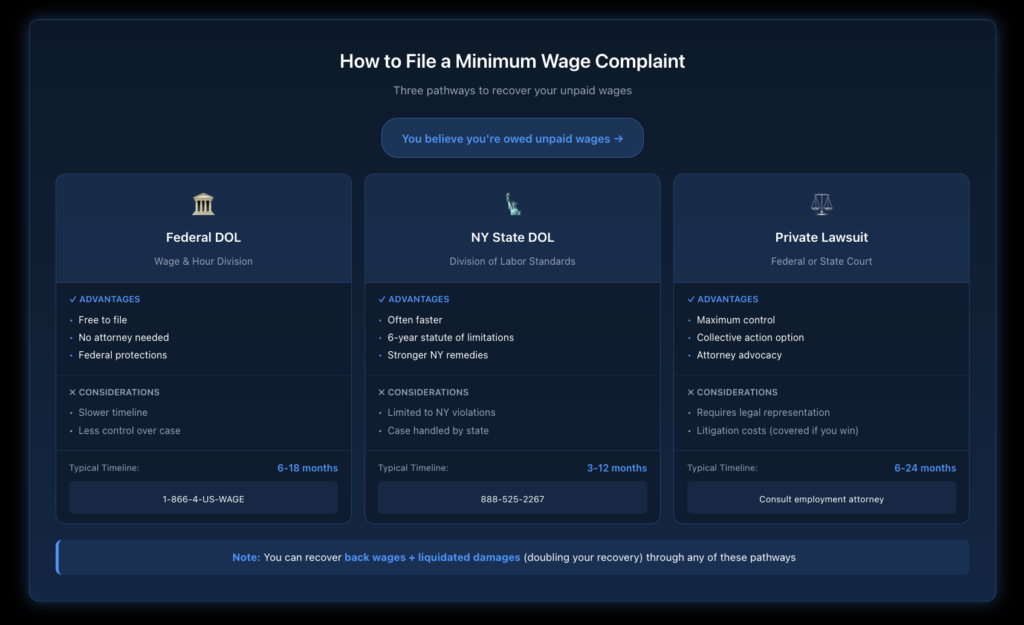
Under federal law, you have two years to file a claim for minimum wage violations, or three years if the violation was “willful”—meaning the employer knew or showed reckless disregard for whether they were violating the law. New York State provides a six-year statute of limitations for wage claims, giving workers substantially more time to seek recovery.
Acting quickly is still important because you can only recover wages going back within the limitations period from when you file. The sooner you file, the more back wages you can potentially recover.
How Do You File a Minimum Wage Complaint?
You have several options for pursuing a minimum wage claim, each with different advantages.
What Is the Process for Filing with the Federal Department of Labor?
The Wage and Hour Division (WHD) of the U.S. Department of Labor investigates minimum wage violations under the FLSA. You can file a complaint online, by phone (1-866-4-US-WAGE), or at a local WHD office. The investigation is free, and you don’t need an attorney to file.
WHD investigators will gather evidence from both you and your employer. If they find violations, they can seek voluntary compliance or file suit on your behalf. The DOL enforcement process aims to recover back wages for affected workers.
How Does Filing with New York State DOL Work?
The New York State Department of Labor Division of Labor Standards handles state minimum wage claims. You can file by calling 888-525-2267 or submitting a claim form. The state process often moves faster than federal enforcement and provides access to New York’s stronger remedies.
New York DOL can collect underpayments without going to court in many cases. They also have the authority to investigate and penalize employers beyond just the wages owed to individual complainants, which helps deter future violations and can help other workers at the same employer.
Should You File a Private Lawsuit Instead?
A private lawsuit may be appropriate when you want more control over your case, when you believe multiple workers are affected, or when you want to pursue damages more aggressively. Under the FLSA, you can bring a “collective action” on behalf of yourself and similarly situated workers, which can increase pressure on employers and share litigation costs.
Working with an employment attorney for a lawsuit provides advantages, including legal expertise in calculating damages, experience negotiating settlements, and an understanding of procedural requirements. Because prevailing plaintiffs recover attorney’s fees, many attorneys handle these cases on contingency. Issues like contractor misclassification often require legal analysis to determine if minimum wage laws apply at all.
What Protections Exist Against Employer Retaliation?
Employers cannot legally retaliate against workers who assert their wage rights.
What Does Anti-Retaliation Protection Cover?
Both federal and New York law prohibit employers from retaliating against employees who file wage complaints, participate in investigations, or testify in proceedings. Retaliation includes termination, demotion, reduction in hours, schedule changes designed to punish you, or other adverse employment actions.
If you experience retaliation, you can file a separate complaint and potentially recover additional damages, including reinstatement, back pay for lost wages, and compensatory damages. The anti-retaliation provisions ensure workers can exercise their rights without fear of losing their jobs. Broader wage theft investigations often uncover retaliation alongside the underlying pay violations.
How Should You Document Potential Retaliation?
If you’ve filed a complaint or raised concerns about minimum wage, document any changes in how you’re treated. Save emails and texts. Note dates and witnesses for verbal conversations. The timing of adverse actions relative to your protected activity is often key evidence in retaliation cases.
What Should You Know About Collective and Class Actions?
When multiple workers experience the same violations, joining together can be powerful.
How Do FLSA Collective Actions Work?
Under the FLSA, workers can bring “collective actions” where other similarly situated employees opt in to join the lawsuit. Unlike class actions, each person must affirmatively choose to participate. These cases can involve dozens, hundreds, or even thousands of workers at large employers.
Collective actions benefit workers by sharing litigation costs and sending a stronger message to employers. They also benefit attorneys by making cases economically viable when individual claims might be too small to justify litigation. Collective actions for wage violations provide detailed information about this powerful enforcement mechanism.
What Makes a Strong Collective Action Case?
The best collective action cases involve widespread, systematic violations affecting many workers. Common pay policies or practices, consistent underpayment patterns, and similar job duties among affected workers all strengthen a collective action. Workers at the same location or in the same position are often ideal candidates for joining together.
What Special Rules Apply to Specific Industries?
Certain industries have unique minimum wage considerations.
What Are the Rules for Restaurant and Hospitality Workers?
The hospitality industry is heavily regulated due to historically high rates of wage violations. New York’s Hospitality Industry Wage Order provides specific rules for restaurants and hotels, including requirements for tip pooling, uniform maintenance, and meal and rest break requirements.
Employers taking a tip credit must provide advance notice and meet specific requirements. They cannot retain any portion of employee tips or require tip sharing with non-tipped employees, like managers. Tip pooling and tip credit rules detail these complex requirements.
What Should Tipped Workers Know?
If you’re a tipped employee, track both your cash wages and tips received. Your employer must ensure your total compensation meets minimum wage. If tips fall short, the employer must make up the difference. You should receive a tip notice explaining your rights and the tip credit amount being taken.
Ready to Take Action?
If you believe you’re being paid less than minimum wage, you don’t have to accept it. The law provides strong protections and meaningful remedies for workers whose rights have been violated. Whether your employer is paying below the hourly minimum, making illegal deductions, failing to pay for all hours worked, or violating tip credit rules, help is available.
Nisar Law Group represents employees in wage and hour cases throughout New York and New Jersey. Our employment law attorneys understand the complexities of minimum wage law and fight to recover every dollar workers are owed. Contact us today for a consultation to discuss your situation and explore your legal options.
Frequently Asked Questions About Minimum Wage Violations
Start by documenting everything—save pay stubs, track your hours worked, and note any conversations about pay. You can file a complaint with the New York State Department of Labor by calling 888-525-2267 or with the federal Wage and Hour Division. You also have the right to consult with an employment attorney about filing a private lawsuit to recover your unpaid wages plus additional damages.
Yes, you can file a private lawsuit against your employer for minimum wage violations. Under federal law, you can recover your unpaid wages plus an equal amount in liquidated damages, effectively doubling your recovery. You can also recover attorney’s fees and costs, which means many employment attorneys will take these cases on contingency with no upfront cost to you.
Investigation timelines vary depending on case complexity and the agency’s workload. Simple cases might resolve within a few months, while complex investigations can take a year or longer. Filing with the New York State DOL often produces faster results than federal investigations. You can check on your complaint’s status by contacting the agency directly.
The 7-minute rule is a rounding practice some employers use where time worked is rounded to the nearest quarter hour. If you work 7 minutes or less, it may be rounded down; more than 7 minutes is rounded up. While rounding is permitted, it must be neutral over time and cannot consistently favor the employer. If rounding systematically reduces your pay, it may constitute a wage violation.
Low-wage workers in industries like restaurants, retail, construction, and domestic work experience the highest rates of wage theft. Immigrant workers, workers paid in cash, and those in small businesses with less oversight are particularly vulnerable. Women and workers of color are disproportionately affected. Workers without written employment agreements or regular pay stubs have more difficulty proving violations.
While you have a right to be paid for work performed, refusing to work is risky and should be approached carefully. In most cases, continuing to work while pursuing your wage claim through proper channels is advisable. Quitting or refusing to work could complicate your legal claims or result in termination. Consult with an employment attorney before taking any drastic action based on unpaid wages.
Lost wages include any compensation you earned but weren’t paid—unpaid hours, minimum wage shortfalls, improperly calculated overtime, illegal deductions, and stolen tips. You can also recover liquidated damages equal to your unpaid wages under most circumstances. If you were retaliated against for complaining about wage violations, you may recover wages lost due to termination, reduced hours, or demotion.
For many workers, yes. The combination of back wages, liquidated damages that double your recovery, and the ability to recover attorney’s fees makes wage claims economically viable even for modest amounts. Collective actions can make smaller individual claims worthwhile by joining with other affected workers. Beyond the money, holding employers accountable helps protect other workers and sends a message about compliance.

