

Yes, you absolutely can report quid pro quo harassment that you witnessed, even if you weren’t the direct target. Federal and New York state laws protect employees who report workplace harassment as third parties, and your employer is legally obligated to investigate your report. In fact, bystanders play a critical role in addressing workplace harassment—your willingness to come forward can help protect colleagues who may feel too intimidated to report the behavior themselves.
Key Takeaways
- Third-party witnesses have the legal right to report quid pro quo harassment they observe in the workplace.
- Federal law under Title VII protects bystanders from retaliation when they report harassment or participate in investigations.
- New York’s Human Rights Law provides even broader protections, covering all employers regardless of size.
- Employers are legally responsible for harassment they knew about—or should have known about—and failed to address.
- You don’t need to be the victim to file a complaint with the EEOC or state agencies.
- Documentation of what you witnessed strengthens both your report and any subsequent investigation.
- Retaliation against witnesses is illegal and can form the basis of an independent legal claim.
Disclaimer: This article provides general information for informational purposes only and should not be considered a substitute for legal advice. It is essential to consult with an experienced employment lawyer at our law firm to discuss the specific facts of your case and understand your legal rights and options. This information does not create an attorney-client relationship.
What Exactly Is Third-Party Reporting of Quid Pro Quo Harassment?
Third-party reporting occurs when someone other than the direct victim reports quid pro quo harassment to their employer, HR department, or an external agency. You might witness a supervisor conditioning a promotion on sexual favors, overhear an inappropriate proposition, or observe a colleague being punished for rejecting unwelcome advances.
Why Does Third-Party Reporting Matter?
Direct victims of quid pro quo harassment often face tremendous pressure not to report. They may fear losing their job, damaging their career, or facing retaliation from the harasser, who typically holds power over their employment. When bystanders step forward, they help create accountability and may provide crucial corroborating evidence that strengthens the victim’s case.
The EEOC’s enforcement guidance recognizes that harassment affects the entire work environment, not just the person directly targeted. If you witness conduct that creates an intimidating or offensive atmosphere, you have standing to report it.
What Legal Protections Exist for Witnesses Who Report Harassment?
Federal and state laws provide robust protections for employees who report harassment they’ve witnessed. Understanding these protections can help you feel more confident about coming forward.
How Does Federal Law Protect Third-Party Reporters?
Title VII of the Civil Rights Act protects employees who “oppose” discriminatory practices or “participate” in investigations. According to EEOC guidance on retaliation, protected activity includes communicating with a supervisor about employment discrimination, answering questions during an employer investigation, and resisting sexual advances or intervening to protect others.
The participation clause provides particularly strong protection. If you serve as a witness in an internal investigation or provide information to the EEOC, you’re protected from retaliation regardless of whether the underlying complaint is ultimately successful.
What Additional Protections Does New York Offer?
New York’s Human Rights Law goes further than federal law in several important ways. The law applies to all employers regardless of size, meaning even employees at small companies have protection when reporting harassment.
Importantly, New York law doesn’t require that harassment be “severe or pervasive” to be actionable. If you witness conduct that would subject an employee to inferior treatment based on sex, it may violate state law even if it wouldn’t meet the federal standard.
The state has also established a confidential hotline (1-800-HARASS-3) that can provide information about filing a complaint and connect callers with volunteer attorneys who can offer limited free assistance.
What Should You Document Before Reporting?
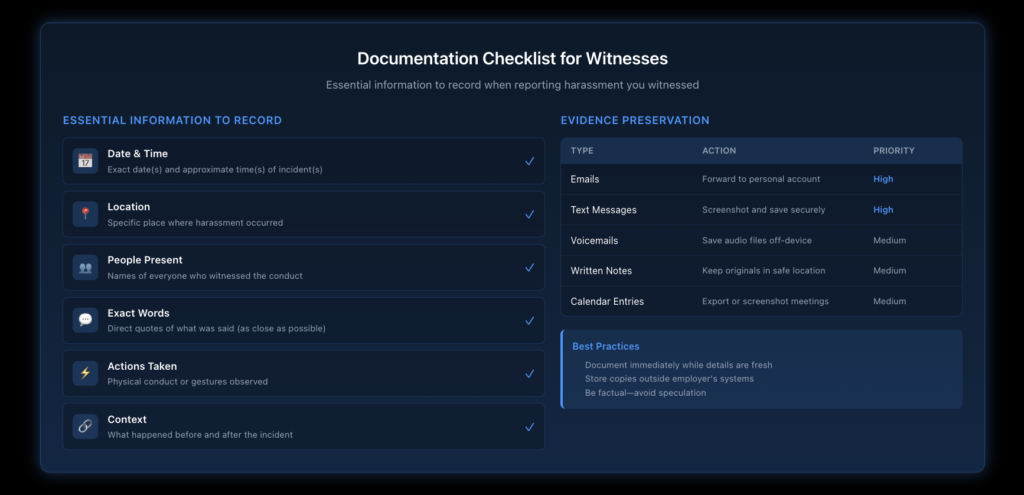
Strong documentation significantly strengthens any harassment report. While you’re not required to have evidence to report what you witnessed, detailed records help investigators understand what happened.
What Information Should You Record?
Create a written record as soon as possible after witnessing an incident. Include specific dates, times, and locations where the conduct occurred. Note exactly what was said or done, using direct quotes when possible. Identify all individuals present, including anyone else who may have witnessed the behavior.
How Should You Preserve Electronic Evidence?
If you have access to emails, text messages, or other digital communications that document the harassment, take steps to preserve them. Forward relevant messages to a personal email account, take screenshots, or save copies outside your employer’s system. Remember that documenting quid pro quo incidents requires attention to detail and secure storage.
How Do You Actually Report Harassment You Witnessed?
You have several options for reporting harassment, and you can pursue multiple channels simultaneously. The right approach depends on your workplace situation and comfort level.
What Is the Internal Reporting Process?
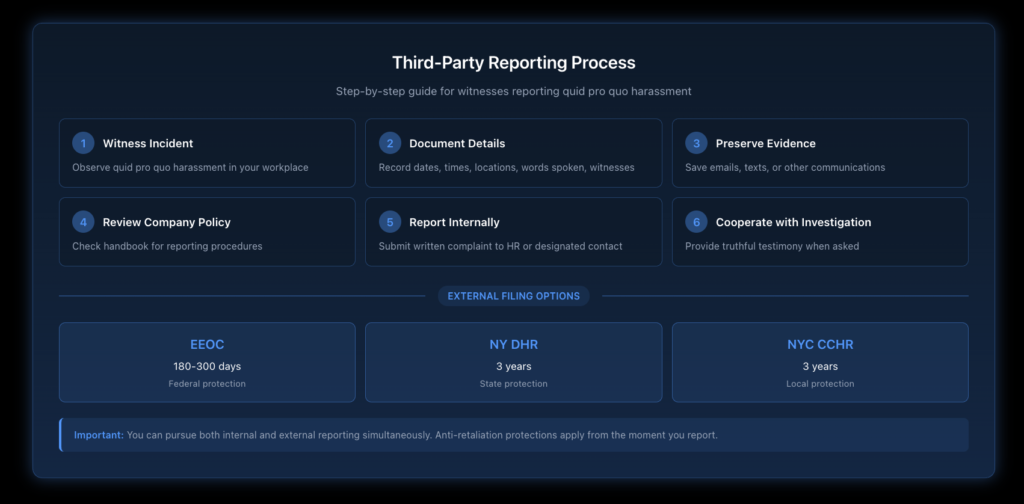
Most organizations have designated channels for reporting harassment. Start by reviewing your employee handbook or contacting HR to understand your company’s procedures. Submit a written complaint that clearly describes what you witnessed, when it occurred, and who was involved.
Even if you’ve made verbal reports, always follow up in writing to create a clear record. If the harassment involves your direct supervisor or the person responsible for receiving complaints, you may report to a higher-level manager or to an alternative HR contact.
When Should You File an External Complaint?
You have the right to file a complaint with government agencies even if you haven’t reported internally—though internal reporting often strengthens your case. External options include the EEOC, the New York State Division of Human Rights, or the NYC Commission on Human Rights for employees in the city.
Federal law generally requires filing with the EEOC within 180 days of the harassment (extended to 300 days in states like New York with their own enforcement agencies). However, New York State allows three years for sexual harassment complaints filed with DHR.
What Happens After You Report Harassment?
Understanding the investigation process can help you know what to expect and how to participate effectively.
What Does an Internal Investigation Look Like?
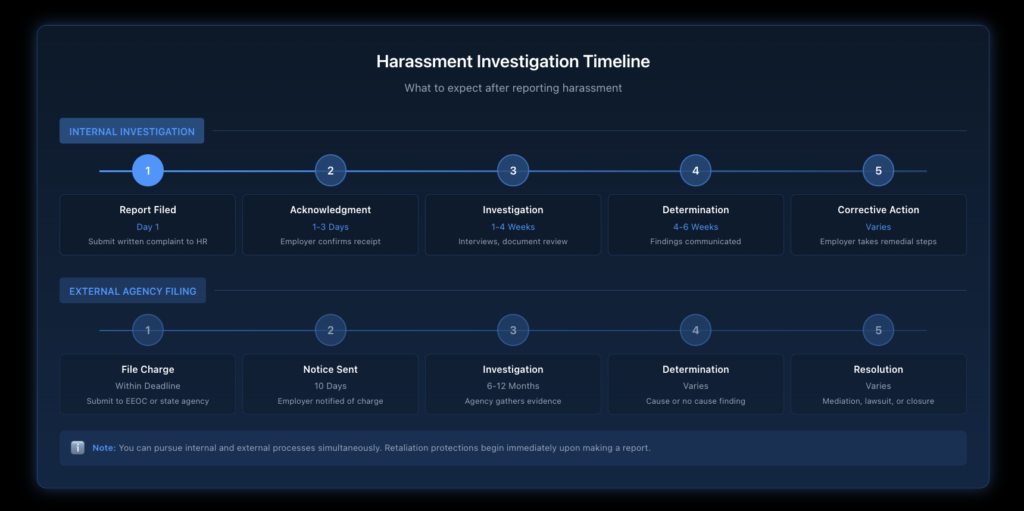
After receiving your report, your employer should promptly investigate the allegations. This typically involves interviewing you about what you witnessed, speaking with the alleged harasser, and talking to other potential witnesses. A thorough investigation examines relevant documents and considers the credibility of all accounts.
Employer liability for quid pro quo harassment depends significantly on how the company responds to reports. Employers who take prompt corrective action may have a defense against liability, while those who ignore or inadequately address complaints face greater exposure.
How Do Agency Investigations Work?
When you file with the EEOC or a state agency, an investigator will gather information from both sides. The agency may request position statements, conduct interviews, and review relevant documents. If the agency finds reasonable cause to believe harassment occurred, it may attempt to mediate a resolution or issue a right-to-sue letter.
What If Your Employer Retaliates Against You for Reporting?
Retaliation against employees who report harassment is illegal under both federal and state law. Understanding what constitutes retaliation helps you recognize it and respond appropriately.
What Actions Qualify as Retaliation?
Retaliation includes any action that would deter a reasonable person from engaging in protected activity. This extends beyond obvious actions like termination or demotion to include more subtle forms of punishment. Negative performance reviews, exclusion from meetings, reassignment to less desirable duties, or increased scrutiny of your work can all constitute retaliation protection violations.
The EEOC’s harassment enforcement guidance provides extensive examples of prohibited retaliatory conduct, including threats to report immigration status, spreading false rumors, and making work more difficult for employees who report discrimination.
How Do You Prove Retaliation?
Retaliation claims require showing a connection between your protected activity (reporting harassment) and the adverse action. Timing often provides important evidence—if negative treatment began shortly after your report, that temporal proximity supports an inference of retaliation.
Document any changes in how you’re treated after making a report. Keep records of your performance before and after reporting, and note any statements by supervisors that suggest retaliatory intent.
What Is the Difference Between Reporting and Being a Witness?
Your role may differ depending on whether you initiate a report or become involved through someone else’s complaint.
What Are Your Obligations as a Witness?
If a colleague files a complaint and you’re asked to participate in the investigation, you should cooperate truthfully. Provide accurate information about what you observed, and avoid speculation about events you didn’t personally witness. Your testimony is protected—answering questions during an employer investigation of alleged harassment is explicitly protected activity under Title VII.
Can You Report Anonymously?
Many employers allow anonymous reporting through hotlines or other mechanisms. While anonymous reports can trigger investigations, they may be more difficult to investigate thoroughly. Consider whether you’re comfortable being identified, keeping in mind that anti-retaliation protections apply to known reporters.
How Does Third-Party Reporting Affect the Victim's Case?
Your report as a bystander can significantly impact the victim’s ability to seek justice and hold the harasser accountable.
Why Is Corroborating Evidence Important?
Harassment cases often involve conflicting accounts. When a third party independently reports the same conduct, it corroborates the victim’s version of events and undermines claims that the harassment was fabricated or misinterpreted. This can be decisive in how quid pro quo is proven in court.
Should You Coordinate with the Victim?
While you may want to support a colleague who experienced harassment, avoid coordinating your reports in ways that could appear manufactured; provide your independent account of what you witnessed. The victim can pursue their own complaint through response strategies that work for their situation.
What Role Do Power Dynamics Play in Third-Party Reporting?
Power dynamics in quid pro quo cases affect both victims and witnesses. Understanding these dynamics helps explain why bystander intervention matters.
Why Don’t Victims Always Report?
Harassers typically hold organizational power over their targets—that’s what makes quid pro quo harassment possible. Victims may reasonably fear that reporting will damage their careers, especially if the harasser controls promotions, assignments, or termination decisions. The employment discrimination laws are designed to protect workers, but the power imbalance creates real barriers to reporting.
How Can Bystanders Help Shift the Balance?
When colleagues report harassment they witness, it reduces the burden on victims and creates accountability. Multiple reports about the same individual are harder for employers to ignore and establish a pattern of misconduct. Your willingness to speak up can help create a workplace culture where harassment isn’t tolerated.
What If the Harassment Involves Non-Sexual Demands?
While quid pro quo harassment typically involves sexual conduct, similar dynamics can occur in other contexts.
Can Quid Pro Quo Apply to Other Protected Characteristics?
Yes. Quid pro quo outside the sexual context can involve conditioning employment benefits on characteristics like race, religion, or national origin. If you witness a supervisor promising favorable treatment in exchange for abandoning religious practices or penalizing an employee for refusing to participate in racially discriminatory conduct, the same reporting principles apply.
How Does This Affect Your Decision to Report?
The broader understanding of quid pro quo means your observations may be relevant even if they don’t involve explicit sexual conduct. Conditional mistreatment based on any protected characteristic warrants reporting and investigation.
Ready to Take Action?
If you’ve witnessed quid pro quo harassment in your workplace, you have both the right and the protection to report it. Taking action may feel intimidating, especially if the harasser holds power in your organization, but the law specifically protects employees who step forward.
Nisar Law Group represents employees throughout New York and New Jersey who have experienced or witnessed workplace harassment. If you’re considering reporting harassment, have questions about your legal protections, or have experienced retaliation for coming forward, our employment law attorneys can help you understand your options and protect your rights. Contact us today for a consultation.
Frequently Asked Questions About Third-Party Reporting of Quid Pro Quo Harassment
Third-party quid pro quo refers to situations where someone other than the direct target reports or is affected by conditional harassment in the workplace. You might witness a supervisor demanding sexual favors in exchange for promotions, observe a colleague facing retaliation for rejecting advances, or notice patterns of preferential treatment given to employees who comply with inappropriate demands. As a third party, you have standing to report this conduct and may even have legal claims if the harassment creates a hostile environment that affects you.
You don’t need physical evidence to report harassment you witnessed—your firsthand account is itself evidence. However, your report will be stronger if you document specific details, including dates, times, locations, exact words spoken, and the identities of others present. If you have access to emails, text messages, or other communications that corroborate what you observed, preserve copies. The key is recording your observations as soon as possible while details are fresh, being as specific and factual as possible without speculation.
Employers bear primary responsibility for harassment in their workplaces, including harassment that third parties report. Under federal law, employers are automatically liable for quid pro quo harassment by supervisors that results in a tangible employment action like termination or demotion. For other harassment, employers may be liable if they knew or should have known about the conduct and failed to take prompt corrective action. This means your report actually triggers legal obligations for your employer to investigate and address the situation.
No. Public criticism, hostile treatment, or verbal abuse directed at you for reporting harassment constitutes illegal retaliation. The law protects employees who report or participate in harassment investigations from any action that would deter a reasonable person from engaging in protected activity. If a manager becomes hostile toward you after you report harassment, document these incidents carefully—they may form the basis of an independent retaliation claim in addition to the original harassment complaint.
For harassment claims, the standard is “preponderance of the evidence”—meaning it must be more likely than not that harassment occurred. You don’t need to prove harassment beyond a reasonable doubt, as in criminal cases. For quid pro quo specifically, the key elements are that unwelcome sexual conduct occurred, submission was made a condition of employment benefits, and the harasser had authority over employment decisions. Third-party witnesses can provide crucial testimony supporting each of these elements.
Time limits vary depending on which agency you file with. For EEOC complaints, you generally have 180 days from the harassment, extended to 300 days in states like New York with their own enforcement agencies. New York State Division of Human Rights allows three years for sexual harassment complaints. However, you should report as soon as possible—delay can affect both the strength of your evidence and your legal options. Internal reporting to your employer should happen promptly, as employers can’t address harassment they don’t know about.
Yes. Quid pro quo harassment can occur at work-related events, during business travel, at off-site meetings, or through electronic communications. If a supervisor makes conditional demands related to employment during a conference, business dinner, or through personal text messages, it’s still workplace harassment. The key is the connection to employment—if the harasser is using their workplace authority to make demands, the location where those demands occur doesn’t eliminate employer liability or your right to report.
You can still report harassment you witnessed, even though you weren’t the direct target. Federal law protects employees who “oppose” discriminatory practices, which includes reporting harassment affecting colleagues. Additionally, if harassment creates a hostile work environment, employees beyond the direct target may have legal claims. Your report helps protect the victim, holds the harasser accountable, and contributes to a safer workplace for everyone.

