

If you’re a New York civil service employee facing disciplinary charges, understanding the strict notice requirements under Section 75 can mean the difference between losing your job and successfully defending your position. Section 75 of the New York State Civil Service Law provides critical procedural protections that agencies must follow before they can discipline or terminate permanent civil service employees, and the notice requirements form the foundation of these protections.
Key Takeaways
- Written notice of charges must be served at least 8 days before any disciplinary hearing.
- The notice must specify each charge in detail with dates, times, and specific misconduct alleged.
- Employees have the right to representation and can request a hearing within 8 days.
- Improper notice can invalidate the entire disciplinary process.
- Different timelines apply for suspension versus termination proceedings.
- NYC agencies have additional notice requirements beyond state law.
Disclaimer: This article provides general information for informational purposes only and should not be considered a substitute for legal advice. It is essential to consult with an experienced employment lawyer at our law firm to discuss the specific facts of your case and understand your legal rights and options. This information does not create an attorney-client relationship.
What Makes Section 75 Notice Requirements So Critical?
The notice requirements under Section 75 aren’t just bureaucratic formalities—they’re constitutional due process protections that ensure civil service employees can meaningfully defend themselves against workplace discipline. A defective notice can provide grounds to dismiss charges entirely, regardless of the underlying allegations. New York courts consistently overturn disciplinary actions when agencies fail to provide proper notice, recognizing that employees cannot mount an effective defense without knowing exactly what they’re accused of doing wrong.
These requirements apply to all permanent competitive class civil service employees who have completed their probationary period, as well as certain non-competitive and labor class employees who have been employed for at least five years. The law covers state agencies, counties, cities, towns, villages, school districts, and most public authorities throughout New York.
What Specific Information Must Section 75 Notices Include?
Every Section 75 notice of charges must contain detailed specifications that allow the employee to understand and respond to each allegation. The notice must identify the specific rules, regulations, or laws allegedly violated, including section numbers and exact language when applicable. Each charge requires sufficient detail about the date, time, location, and nature of the alleged misconduct—vague or conclusory statements like “insubordination” or “incompetence” without supporting specifics violate due process.
The charges must describe the actual conduct that constitutes the violation, not just legal conclusions. For example, rather than simply stating “neglect of duty,” the notice must specify that “on March 15, 2024, you failed to complete required safety inspections of equipment in Building A, resulting in machinery operating without proper safety protocols.” This level of detail enables employees to recall specific incidents, gather relevant evidence, and identify potential witnesses for their hostile work environment defense.
Agencies must also include notice of the employee’s rights, including the right to representation by an attorney or union representative, the right to a hearing, and the specific deadline for requesting that hearing. The notice should specify the potential penalties being sought, whether that’s reprimand, suspension, demotion, or wrongful termination.
How Are Section 75 Notices Properly Served?
Service of the notice triggers important legal deadlines, so New York law establishes specific requirements for how notices must be delivered. Personal service—handing the notice directly to the employee—provides the clearest proof of proper service and starts the clock running immediately. When personal service isn’t possible, agencies can leave the notice at the employee’s last known residence with a person of suitable age and discretion, followed by mailing a copy.
Some agencies may serve notice through certified mail, return receipt requested, though this method can create disputes about when the employee actually received the charges. The employee’s collective bargaining agreement may specify additional or alternative service methods that the employer must follow. During suspensions without pay, agencies often attempt service at the employee’s home address, but employees should ensure their employer has current contact information.
What Deadlines Apply to Section 75 Notice Requirements?
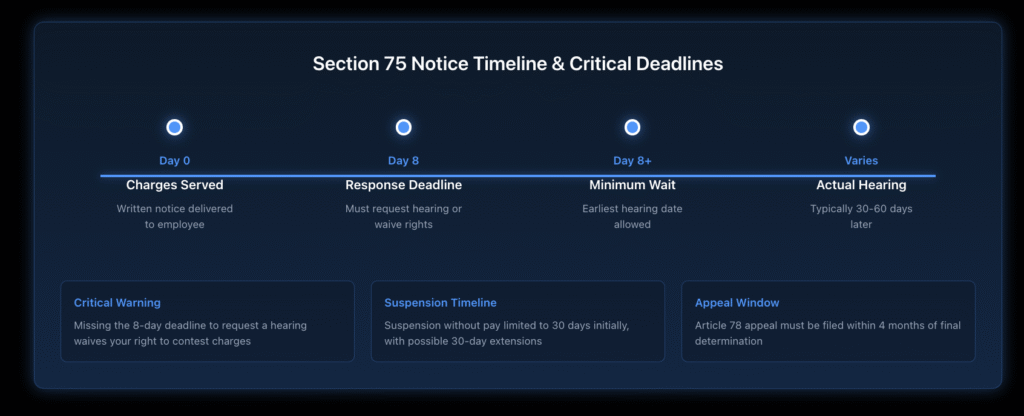
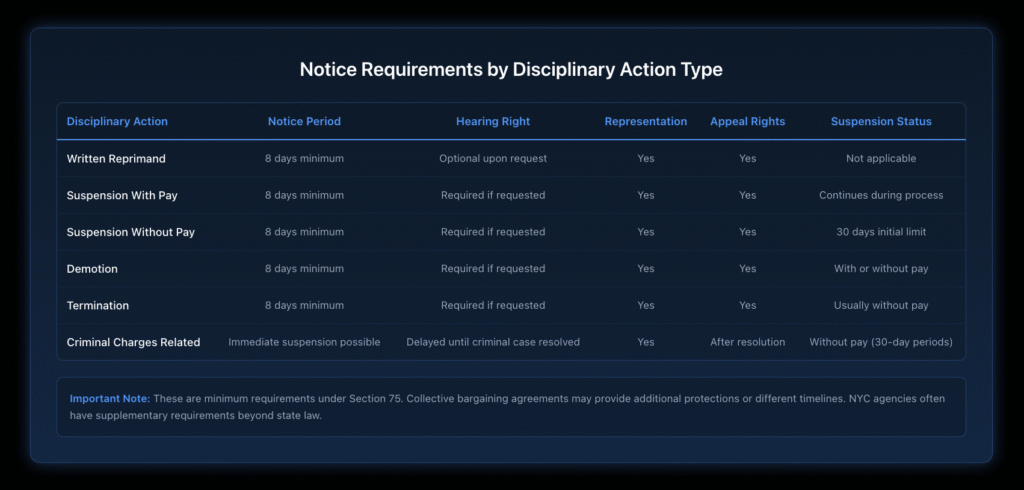
The statutory minimum requires that written charges be served at least eight days before the date of the hearing, but this represents just the beginning of the timeline considerations. Once served with charges, employees have eight days to respond and request a hearing—failure to make this request within the deadline constitutes a waiver of hearing rights, allowing the agency to impose discipline based solely on the charges.
After requesting a hearing, the employee must receive notice of the hearing date, time, and location. While the law permits hearings as soon as eight days after service of charges, practical considerations and hearing officer availability often push hearings weeks or months into the future. During this waiting period, agencies can suspend employees with or without pay, depending on the nature of the charges and applicable collective bargaining agreements.
Different timelines apply when an employee faces criminal charges related to their employment. Under those circumstances, the agency may suspend without pay for up to 30 days initially, with possible extensions of additional 30-day periods. However, if criminal charges are dismissed or the employee is acquitted, they’re entitled to back pay for the suspension period, similar to severance negotiation rights.
What Happens If Section 75 Notice Requirements Aren't Met?
Defective notice can provide powerful grounds for challenging disciplinary action, but employees must properly preserve and raise these objections. Courts may dismiss charges entirely when notices fail to provide sufficient detail, serve improper parties, or violate timeline requirements. However, some defects may be considered harmless errors if they don’t prejudice the employee’s ability to defend against the charges.
Employees should document any notice defects immediately upon receiving charges. Taking photographs of envelopes, postmarks, and service documents can prove improper service methods or timeline violations. If the charges lack specificity, employees should consider requesting a bill of particulars—a more detailed statement of the charges—before the hearing.
Failure to object to defective notice at the hearing level may waive the right to raise these issues on appeal. That’s why having experienced representation who understands Section 75’s technical requirements proves invaluable. An attorney can identify notice defects, properly preserve objections, and potentially negotiate dismissal of charges based on procedural violations.
How Do NYC Agency Requirements Differ?
New York City agencies must comply with additional notice requirements beyond state Section 75 protections. The NYC Administrative Code and agency-specific rules often mandate longer notice periods, additional service methods, and more detailed charge specifications. For example, certain NYC employees receive Loudermill notices before suspension, outlining the charges and providing an opportunity for a pre-suspension response.
The Department of Education, NYPD civilian employees, and other city workers may have specific procedural rules in their collective bargaining agreements that supplement Section 75. These agreements might require progressive discipline, additional notice for certain types of charges, or expedited hearing procedures. Understanding both Section 75 and agency-specific requirements helps ensure complete protection of employee rights, particularly when facing sexual harassment allegations or whistleblower retaliation.
What Should You Do When Receiving Section 75 Charges?
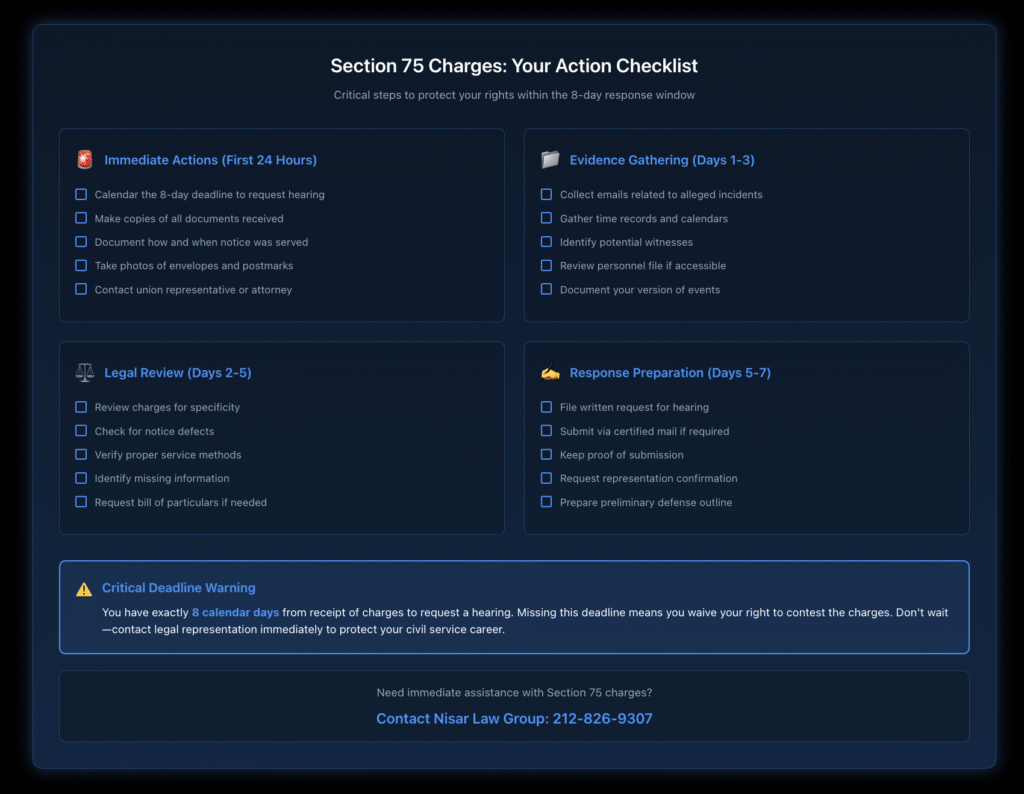
Immediate action upon receiving Section 75 charges can significantly impact the outcome of your case. First, carefully review the notice to identify all deadlines, particularly the eight-day window to request a hearing. Missing this deadline waives crucial rights, so calendar it immediately and consider requesting a hearing even if you’re still evaluating options.
Document everything about how and when you received the notice. Keep all envelopes, certified mail receipts, and any other service documentation. If someone else accepted service on your behalf, get a written statement about when and how they received it. This documentation becomes critical if service issues arise later, especially in cases involving sexual orientation discrimination or religious discrimination claims.
Contact an employment attorney or union representative immediately—ideally within 24-48 hours of receiving charges. Early intervention allows time to evaluate notice defects, gather evidence, identify witnesses, and develop defense strategies. Many notice defects must be raised promptly, or they’re waived, so quick action protects all available defenses.
Begin gathering relevant documents, emails, and other evidence related to the charges. If the allegations involve specific dates, check calendars, time records, and emails from those periods. Identify potential witnesses who can support your version of events. The more preparation done before the hearing, the stronger your defense will be.
What Defenses Can Improper Notice Provide?
Technical notice violations can defeat otherwise valid disciplinary charges when properly raised and argued. Vague or ambiguous charges that don’t specify particular conduct violate due process because employees can’t defend against unknown accusations. Courts have dismissed charges using generic terms like “conduct unbecoming” or “poor performance” without detailing specific incidents.
Untimely service presents another powerful defense. If an agency serves charges less than eight days before the hearing or fails to properly document service, the entire proceeding may be invalid. Similarly, serving the wrong person or using improper service methods can void the charges, much like missing EEOC filing deadlines can bar discrimination claims.
Statute of limitations issues can also arise. While Section 75 doesn’t specify a limitations period for bringing charges, collective bargaining agreements often do. Additionally, agencies cannot indefinitely delay bringing charges after learning about alleged misconduct—unreasonable delays can violate due process or constitute waiver, similar to the 300-day deadline for filing discrimination complaints with the EEOC.
Amendment of charges after service raises additional notice concerns. While agencies may sometimes correct minor technical errors, substantial amendments require new notice and reset timelines. Adding new charges, changing dates, or alleging different misconduct generally requires starting the notice process over.
How Can Legal Representation Help Navigate Notice Requirements?
Employment attorneys experienced with Section 75 can spot notice defects that non-lawyers might miss. They understand how courts interpret notice requirements and which defects warrant dismissal versus those considered harmless error. This expertise proves particularly valuable when charges involve complex fact patterns or multiple alleged violations, including cases of pregnancy discrimination or race discrimination.
Attorneys can also negotiate with agencies when notice defects exist. Rather than proceeding to a hearing with flawed charges, agencies sometimes agree to dismiss or reduce charges to avoid having their entire case thrown out on procedural grounds. These negotiations can result in settlements that avoid the time, expense, and uncertainty of hearings, similar to effective overtime and wage disputes.
During the hearing itself, experienced representatives know how to properly object to notice defects and preserve issues for appeal. They can cross-examine agency witnesses about notice procedures and present evidence of improper service or defective charges. This advocacy ensures that procedural protections actually protect employee rights, whether dealing with military discrimination or LGBT discrimination cases.
Take Action to Protect Your Civil Service Career
Understanding Section 75 notice requirements is just the first step in protecting your employment rights. If you’ve received disciplinary charges or believe your agency may be preparing to take action against you, don’t wait until deadlines pass to seek help.
Contact Nisar Law Group today for a confidential consultation about your Section 75 rights. Our experienced employment attorneys understand the technical requirements agencies must follow and how to use procedural protections to your advantage. We’ll review your notice for defects, help preserve your rights, and develop a comprehensive defense strategy.
Frequently Asked Questions About Section 75 Notice Requirements
While Section 75 itself doesn’t establish a statute of limitations for bringing disciplinary charges, agencies cannot unreasonably delay initiating proceedings after discovering alleged misconduct. Most collective bargaining agreements specify time limits—typically 18 months to 3 years—within which charges must be filed. Additionally, unreasonable delays that prejudice an employee’s ability to defend themselves may violate due process, even without a specific deadline.
Section 75 of the New York Civil Service Law provides procedural protections for permanent civil service employees facing discipline or termination. It guarantees written notice of charges, the right to a hearing, representation rights, and appeal procedures. These protections apply to competitive class employees who’ve completed probation and certain non-competitive and labor class employees with five years of service.
Article 75 provides several critical rights: written notice of specific charges at least 8 days before a hearing, the right to representation by an attorney or union representative, the opportunity for a hearing before an impartial hearing officer, the right to present evidence and cross-examine witnesses, and the right to appeal adverse decisions. It also limits suspensions without pay and requires back pay if charges are dismissed.
The Section 75 process begins with service of written charges specifying the alleged misconduct. The employee has 8 days to request a hearing. At the hearing, the employer presents evidence first, then the employee can respond and present defenses. The hearing officer issues findings and recommendations. The appointing authority makes the final decision, which the employee can appeal through Article 78 proceedings.
The employer typically bears the cost of the hearing officer and hearing facilities. Employees must pay for their own representation unless their union provides an attorney. If an employee successfully challenges their discipline and wins back pay, they may be entitled to attorney’s fees in some circumstances, particularly if the employer acted in bad faith.
The appointing authority—usually the agency head or designated official—bears primary liability for following Section 75 procedures. Individual supervisors who initiate charges may face personal liability if they act maliciously or in bad faith. Agencies face liability for back pay, benefits, and sometimes attorneys’ fees when they violate Section 75 requirements.
