

A hostile work environment occurs when unwelcome conduct based on a protected characteristic—such as race, sex, religion, national origin, age, or disability—becomes severe or pervasive enough to create an intimidating, offensive, or abusive atmosphere that interferes with your ability to do your job. This isn’t just about having a difficult boss or annoying coworkers. Under federal law, the behavior must target you because of who you are, not simply because someone is unpleasant to work with.
Understanding what actually qualifies as a hostile work environment under the law can help you determine whether you have a valid legal claim and what steps to take next.
Key Takeaways
- A legally hostile work environment requires unwelcome conduct based on a protected characteristic (race, sex, religion, age, disability, etc.).
- The behavior must be severe OR pervasive—it doesn’t have to be both.
- New York State law provides broader protections than federal law, with no “severe or pervasive” requirement since 2019.
- Documentation is critical: keep records of incidents, witnesses, and any complaints you file.
- Employers can be held liable even if they didn’t know about the harassment, depending on who committed it.
- You have legal options, including filing complaints with the EEOC, NY Division of Human Rights, or pursuing a lawsuit.
Disclaimer: This article provides general information and should not be considered a substitute for legal advice. It is essential to consult with an experienced employment lawyer to discuss the specific facts of your case and understand your legal rights and options. This information does not create an attorney-client relationship.

What Is the Legal Definition of a Hostile Work Environment?
The legal standard for a hostile work environment comes from Title VII of the Civil Rights Act of 1964 and has been refined through decades of court decisions. Under federal law, to establish a hostile work environment claim, you must demonstrate four key elements.
What Are the Required Elements of a Hostile Work Environment Claim?
First, you experienced unwelcome conduct based on a protected characteristic. The EEOC defines harassment as unwelcome conduct based on race, color, religion, sex (including pregnancy, sexual orientation, and gender identity), national origin, age (40 or older), disability, or genetic information.
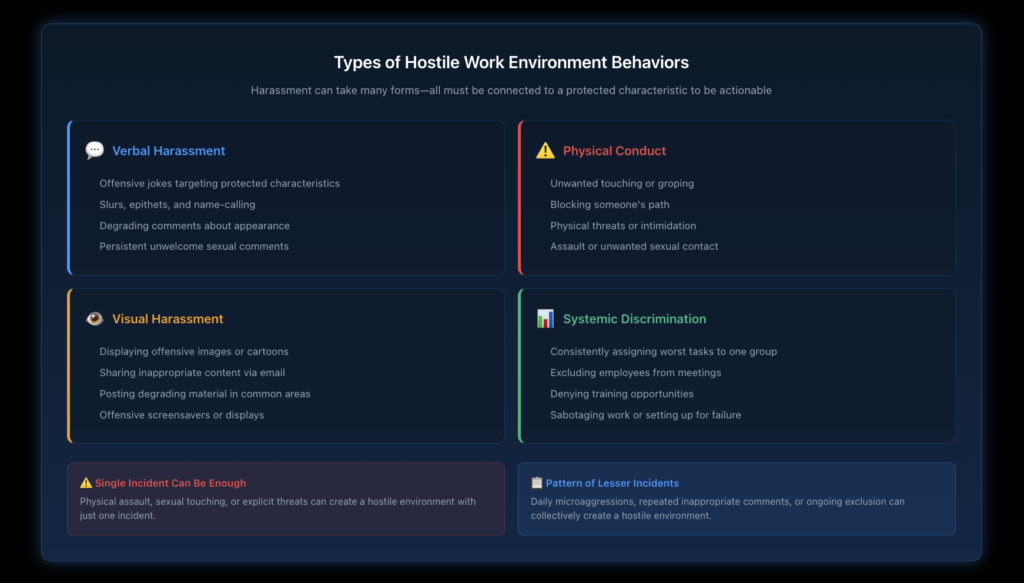
Second, the conduct was either severe or pervasive. This is where many claims fail. A single offensive comment usually won’t meet this threshold unless it’s extremely egregious, like a physical assault or explicit threat. However, a pattern of lesser incidents—daily microaggressions, repeated inappropriate comments, ongoing exclusion—can collectively create a hostile environment.
Third, you subjectively found the conduct hostile or abusive. You personally experienced the work environment as intimidating or offensive.
Fourth, a reasonable person in your position would also find it hostile. Courts evaluate this from the perspective of someone with the same protected characteristics.
How Does New York Law Differ from Federal Standards?
New York employees have significant advantages over those in other states. Since 2019, the New York State Human Rights Law eliminated the “severe or pervasive” requirement for harassment claims. This means behavior doesn’t need to reach the high federal threshold—it simply needs to rise above “petty slights or trivial inconveniences.”
Additionally, New York City’s Human Rights Law provides even broader protections, covering additional characteristics like caregiver status and requiring employers to provide reasonable accommodations in more situations. If you work in New York, understanding these enhanced workplace harassment protections can significantly impact your legal options.
Which Behaviors Actually Create a Hostile Work Environment?
Not every unpleasant workplace interaction qualifies as illegal harassment. The key distinction is whether the behavior relates to a protected characteristic and whether it’s severe or pervasive enough (under federal law) to alter your working conditions.
What Types of Verbal Conduct Contribute to Hostile Environments?
Verbal harassment remains one of the most common forms of hostile work environment behavior. This can include offensive jokes targeting someone’s race, religion, or gender; slurs and epithets; degrading comments about someone’s appearance related to their protected characteristics; and persistent unwelcome sexual comments or requests.
The severe or pervasive legal standard considers factors like how often the conduct occurs, how offensive it is, whether it’s physically threatening or humiliating, and whether it interferes with your work performance.
What Physical Behaviors Cross the Line?
Physical conduct often meets the “severe” threshold more quickly than verbal harassment. This includes unwanted touching, blocking someone’s path, invading personal space in an intimidating manner, physical assault or threats of violence, and sexual assault or unwanted sexual contact.
Even a single incident of sexual harassment involving physical contact can be severe enough to constitute a hostile work environment. The EEOC’s guidance on harassment makes clear that physical assaults or threats are treated as particularly serious.
How Does Visual Harassment Contribute to a Hostile Environment?
Visual forms of harassment are often overlooked but can be equally damaging. Displaying offensive images, cartoons, or symbols; sharing inappropriate content through email or messaging; posting degrading material in common areas; and using offensive screensavers or desktop images all contribute to creating a hostile atmosphere.
What About Discrimination in Work Assignments and Opportunities?
Hostile work environment claims can also arise from discriminatory treatment in how work is assigned and evaluated. Consistently giving the worst assignments to employees of a particular race, excluding women from important meetings or client interactions, denying training opportunities based on age, and sabotaging someone’s work or setting them up to fail all contribute to a hostile environment when they’re motivated by bias.
This type of conduct often overlaps with other discrimination claims. If you’re experiencing both a hostile work environment and discriminatory employment decisions, you may have multiple legal avenues to pursue.
What Behaviors Don't Qualify as a Legally Hostile Work Environment?
Understanding what doesn’t meet the legal definition is just as important as knowing what does. Many employees mistakenly believe they have a hostile work environment claim when the behavior, while unpleasant, doesn’t rise to the level of illegal harassment.
What’s the Difference Between a Toxic Workplace and a Hostile Work Environment?
A toxic workplace might involve poor management, unrealistic expectations, office politics, or generally unpleasant coworkers—but none of this is illegal unless it’s connected to discrimination based on a protected characteristic. Your boss can be a jerk to everyone equally without creating a legally actionable hostile work environment.
The distinction matters because employer liability for hostile work environments only attaches when the conduct violates anti-discrimination laws. General rudeness, while demoralizing, doesn’t trigger these protections.
What About Isolated Incidents or Petty Slights?
Under federal law, isolated incidents typically don’t create a hostile work environment unless they’re extremely severe. A single off-color joke, one insensitive comment, or occasional personality conflicts generally won’t meet the legal threshold. However, remember that New York State law has a lower threshold, so behavior that might not be actionable federally could still violate state law.
Courts look at the totality of circumstances, so even if individual incidents seem minor, a pattern of such conduct can establish a hostile environment when viewed collectively.
How Do You Prove a Hostile Work Environment?
Building a strong hostile work environment case requires thorough documentation and understanding of what evidence courts find persuasive. Many valid claims fail not because the harassment didn’t occur, but because there wasn’t sufficient evidence to prove it.
What Documentation Should You Keep?
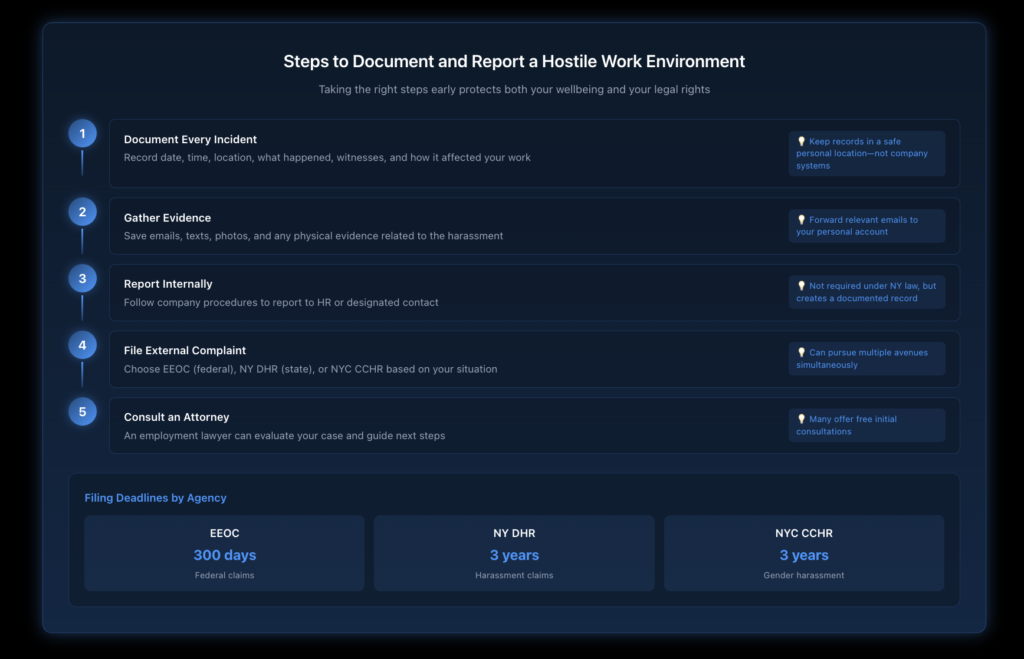
Effective documentation is the foundation of any harassment claim. You should maintain detailed records, including the date, time, and location of each incident; exactly what was said or done; who was present as witnesses; how the incident affected your work; and any physical evidence like emails, texts, or photos.
Keep this documentation in a safe place outside of work—your personal email, home computer, or a secure cloud storage account. Don’t rely solely on company systems that you might lose access to if your employment ends.
What Role Do Witnesses Play?
Witness testimony can significantly strengthen your case, especially for verbal harassment that doesn’t leave a paper trail. Identify colleagues who observed the behavior or whom you told about incidents shortly after they occurred. Even if witnesses are reluctant to get involved while still employed, their testimony could become available later.
How Important Is Reporting to HR?
Reporting procedures matter for several reasons. First, your employer can’t fix a problem they don’t know about. Second, in some cases, an employer can defend against liability by showing they had effective anti-harassment policies and the employee unreasonably failed to use them. Third, your internal complaint creates a documented record that you raised concerns.
However, under New York law, you don’t have to complain internally before filing a legal claim. If you don’t trust HR or fear retaliation, you can proceed directly to external agencies.
Who Can Be Held Liable for a Hostile Work Environment?
Understanding liability helps you identify who should be named in a complaint or lawsuit and what defenses the employer might raise.
When Is an Employer Automatically Liable?
Employers are automatically liable when a supervisor’s harassment results in a tangible employment action—like firing, demotion, or significant change in duties. In these cases, the employer cannot escape liability even if they had good anti-harassment policies in place.
When supervisor harassment creates a hostile environment without a tangible employment action, employers can raise an affirmative defense by showing they exercised reasonable care to prevent and correct harassment, and the employee unreasonably failed to take advantage of preventive opportunities. However, this defense is significantly limited under New York law.
What About Harassment by Coworkers or Third Parties?
Employers can be liable for coworker harassment if they knew or should have known about the conduct and failed to take prompt corrective action. The same standard applies to harassment by customers, clients, vendors, or other third parties over whom the employer has some control.
If you’re experiencing harassment from customers or clients, your employer has an obligation to protect you. This is particularly relevant in industries like hospitality, healthcare, and retail, where employees regularly interact with the public.
What Legal Options Do You Have?
Multiple avenues exist for addressing a hostile work environment, and you may be able to pursue more than one simultaneously.
How Do You File a Complaint with the EEOC?
Before filing a federal lawsuit under Title VII, you must first file a charge with the Equal Employment Opportunity Commission. You generally have 300 days from the last incident of harassment to file if your state has its own anti-discrimination agency (which New York does).
The EEOC will investigate your charge and may attempt mediation. If they don’t resolve your case, they’ll issue a “Right to Sue” letter allowing you to proceed to federal court.
What Are Your Options Under New York Law?
You can file a complaint with the New York State Division of Human Rights, which enforces the state Human Rights Law. You have three years to file a harassment complaint with this agency. Alternatively, you can bypass administrative agencies entirely and file directly in state court.
NYC employees can also file with the NYC Commission on Human Rights, which enforces the city’s particularly strong anti-discrimination laws.
Is It Worth Suing for a Hostile Work Environment?
This depends on many factors, including the severity of the harassment, the strength of your evidence, potential damages, and your personal goals. Wrongful termination cases that include hostile work environment claims may involve significant damages, while cases involving only emotional distress might have a lower potential recovery.
An experienced employment attorney can evaluate your specific situation and help you understand the realistic outcomes and costs involved.
What Should You Do If You're Experiencing a Hostile Work Environment?
Taking the right steps early can protect both your well-being and your legal rights.
What Immediate Steps Should You Take?
Start documenting everything immediately. Make sure your records are specific and contemporaneous—courts give more weight to notes made shortly after incidents than to recollections months later. Save any physical or electronic evidence.
Consider consulting with an employment attorney before taking any major action. Many offer free consultations and can help you understand your options and avoid common mistakes. Understanding your rights regarding protected activities can help you engage in the process without inadvertently creating problems for your case.
How Do You Protect Yourself from Retaliation?
Retaliation for reporting harassment is illegal, but that doesn’t mean it never happens. Document any changes in how you’re treated after making a complaint. Retaliation can be subtle—exclusion from meetings, increased scrutiny of your work, or suddenly negative performance reviews.
If you experience employer retaliation, this itself becomes a separate legal claim that can strengthen your overall case.
Can You Quit Because of a Hostile Work Environment?
In some cases, if the harassment is severe enough and your employer fails to address it, you may be able to argue constructive discharge—that conditions became so intolerable that a reasonable person would feel compelled to resign. This can preserve your right to damages as if you’d been fired.
However, quitting should generally be a last resort. Before resigning, consult with an attorney about whether you’ve met the legal threshold for constructive discharge and how resignation might affect your potential claims.
Ready to Take Action?
If you’re experiencing a hostile work environment in New York or New Jersey, you don’t have to face it alone. Nisar Law Group has extensive experience representing employees in harassment and discrimination cases. Our employment attorneys understand both the legal complexities and the personal toll these situations take.
Contact us today for a confidential consultation to discuss your situation and understand your options.
Frequently Asked Questions About Hostile Work Environment Behaviors
A hostile work environment legally requires unwelcome conduct based on a protected characteristic like race, sex, religion, age, or disability. Under federal law, this conduct must be severe or pervasive enough that a reasonable person would find it intimidating, hostile, or abusive. New York State law provides broader protection, requiring only that the conduct exceed “petty slights or trivial inconveniences.” The behavior must actually affect your working conditions—simple personality conflicts or general rudeness, while unpleasant, don’t meet the legal definition.
You must prove that you experienced unwelcome conduct based on a protected characteristic, that the conduct was severe or pervasive (under federal law), that you found it hostile, and that a reasonable person would also find it hostile. You’ll also need to establish employer liability, which depends on whether the harasser was a supervisor and whether the employer had and enforced anti-harassment policies. Documentation, witness testimony, and evidence of employer knowledge are crucial to meeting this burden.
A toxic work environment involves generally negative conditions—poor management, excessive workloads, office politics, or interpersonal conflicts—that make work unpleasant but aren’t illegal. A hostile work environment specifically involves harassment or discrimination based on legally protected characteristics. Your workplace can be extremely toxic without being legally hostile, and vice versa. The key question is whether the negative treatment connects to your race, sex, religion, age, disability, or another protected characteristic.
Document every incident with specific details, including dates, times, locations, what was said or done, and who witnessed it. Look for patterns—are you treated differently than colleagues who don’t share your protected characteristics? Save emails, texts, and any other communications. Note any witnesses and tell trusted colleagues about incidents so they can corroborate your timeline. Compare your treatment to similarly situated employees and document any disparities in assignments, opportunities, or discipline.
This depends on the severity of harassment, the strength of evidence, potential damages, and your personal goals. Strong cases with clear documentation, severe conduct, and tangible harm (job loss, medical expenses, significant emotional distress) may warrant litigation. Weaker cases might be better resolved through internal processes or agency complaints. Consider consulting an employment attorney who can evaluate your specific situation, explain realistic outcomes, and help you weigh the emotional and financial costs of litigation against potential recovery.
Examples include repeated racial slurs or offensive jokes; unwanted sexual comments, touching, or requests; mocking someone’s disability or religious practices; age-based comments like “you’re too old to learn new technology”; displaying offensive images or symbols; excluding someone from meetings or opportunities based on their protected characteristics; and threats or intimidation targeting someone’s identity. The behavior can be verbal, physical, or visual, and can come from supervisors, coworkers, or even customers.
You can always quit, but strategically it’s usually better to either stay and pursue your claim or ensure you’ve met the legal standard for constructive discharge before resigning. Constructive discharge occurs when conditions become so intolerable that a reasonable person would feel compelled to quit. If you resign without meeting this threshold, you may limit your ability to recover certain damages. Before quitting, document everything, report the harassment through proper channels, and consult with an employment attorney about timing and how resignation affects your legal options.

